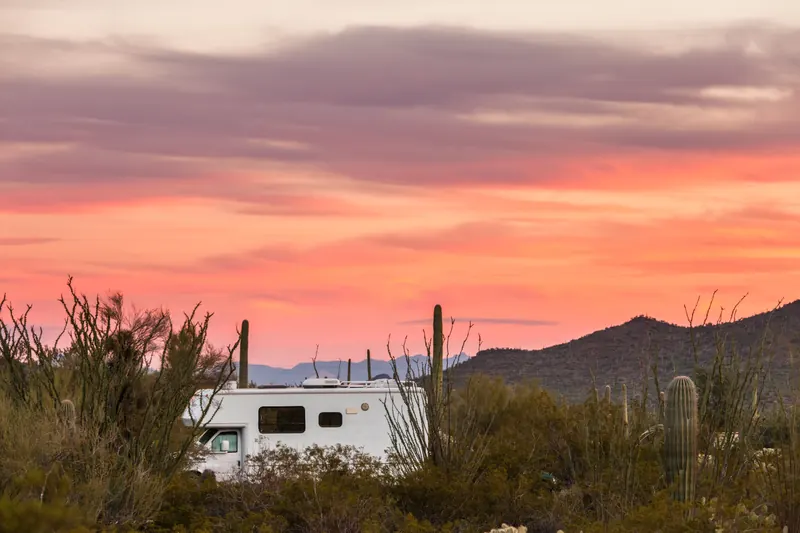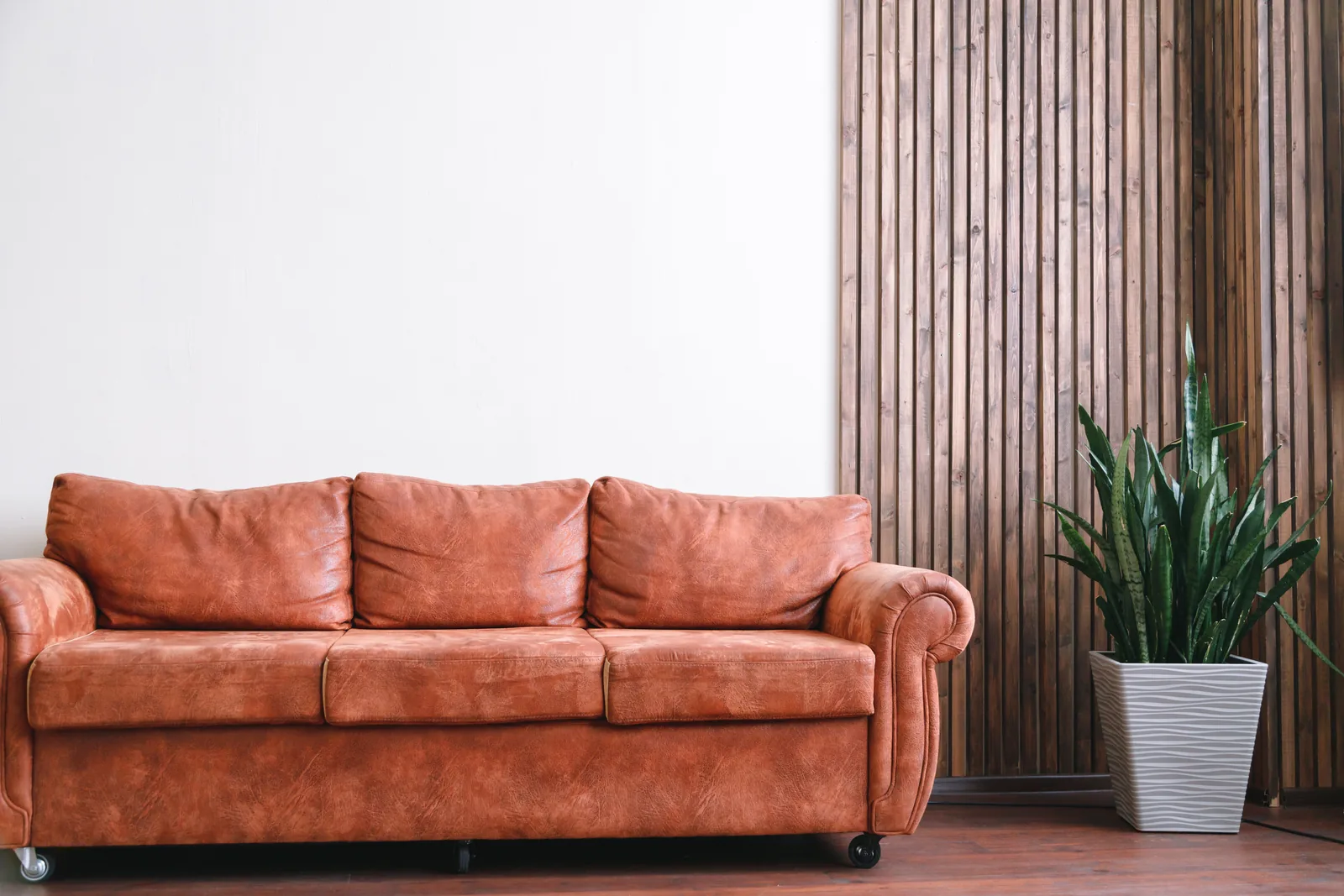
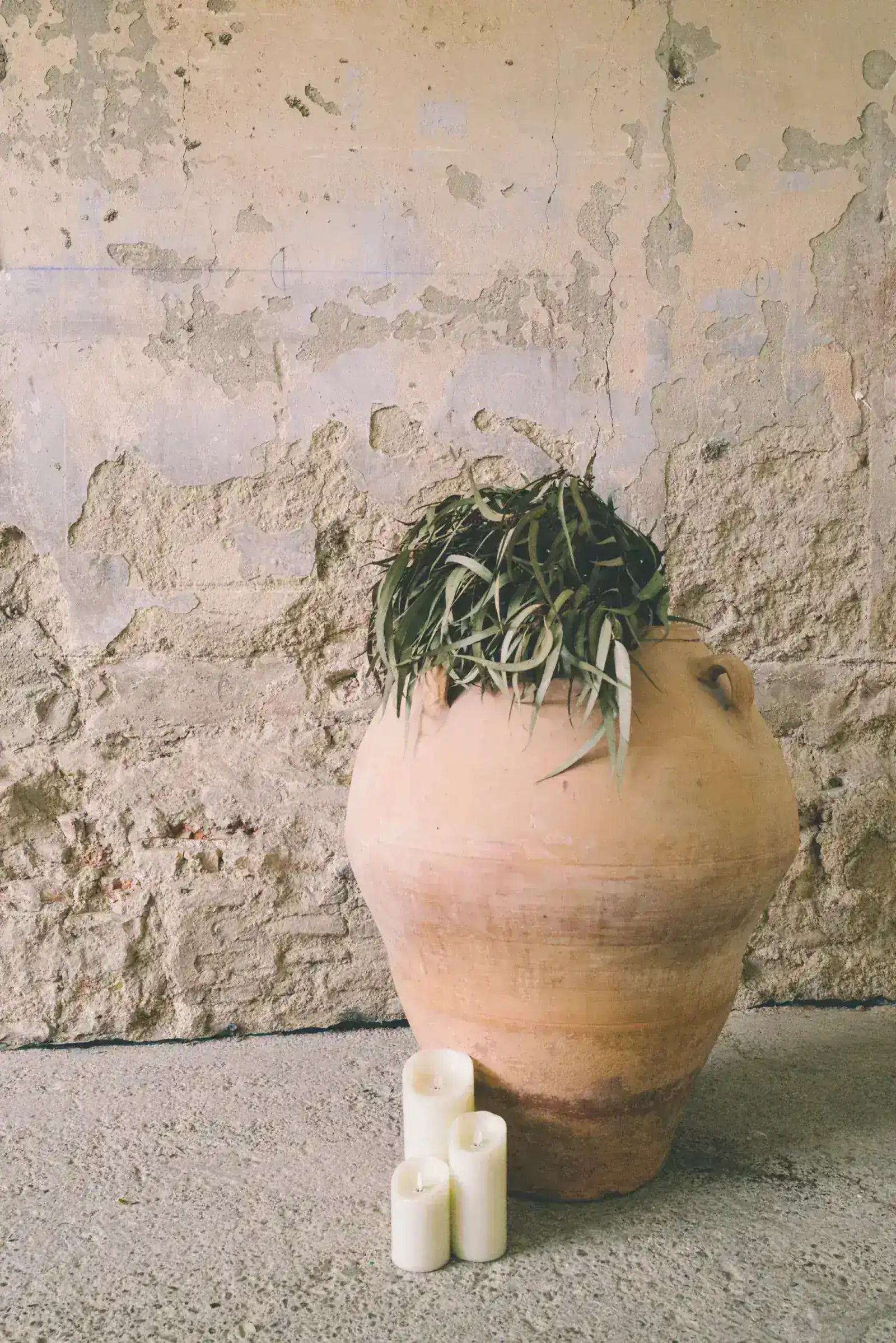
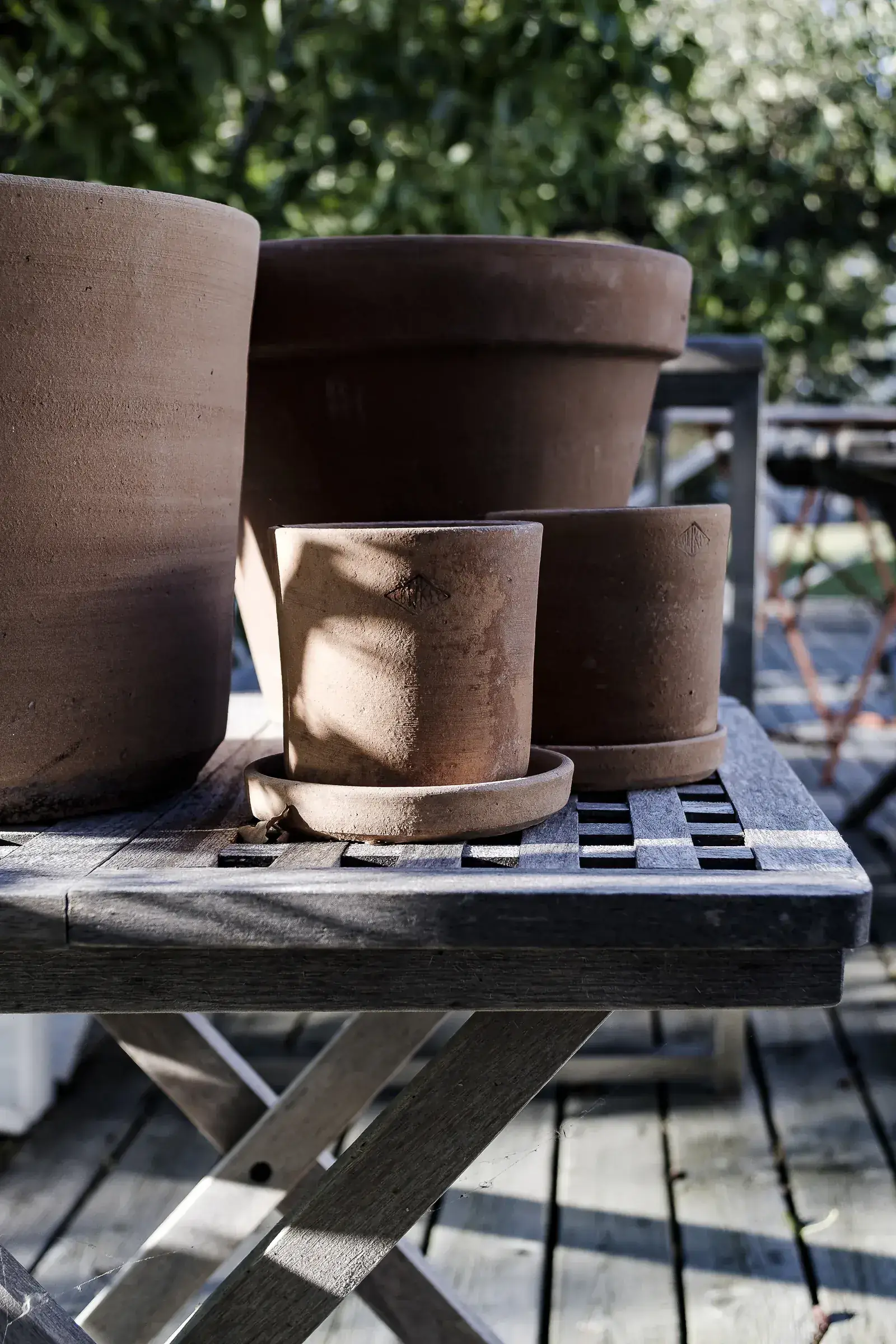
Years ago, on an ordinary Tuesday in Santa Fe, I walked out of the tourist blocks into a residential street and stopped in front of a house that rearranged my entire idea of decorating. Warm plaster, one bench, one handwoven blanket, a cluster of clay pots that had clearly outlived several presidents. Nothing was trying. Everything was working. That street is the reason this site exists, and this page is the map of everything it taught me.
Here is how the map works. Western and southwestern decor is not one style; it is a family of four, and most decorating frustration in this territory comes from mixing their rules without knowing it. Below: the family tree that sorts them, a short history of where they come from, the five-step method for building any of them, room-by-room budgets consolidated from every guide we have published, and the eight in-depth articles this page routes to. Bookmark this one; read the others as you need them.
The Family Tree: 4 Styles, One Desert
The disambiguation the whole internet skips, settled in one table. Western decor is the heavier, leather-and-iron interior tradition of ranch culture; southwestern decor is the lighter, clay-and-textile tradition of the desert itself. If southwestern is the desert at noon, western is the same land at nightfall, indoors, by the fire. Ranch style is western’s lived-in domestic expression, and desert modern is southwestern stripped to its architecture.
| Southwestern | Western / Ranch | Desert Modern | (Contrast: Farmhouse) | |
|---|---|---|---|---|
| Palette | Terracotta, sage, cream, sand | Brown, tan, cream, black | Sand, white, black, one clay note | White, greige, muted blue |
| Materials | Clay, handwoven wool, light wood, iron accents | Broken-in leather, iron, stone, heavy wool | Concrete, pale wood, steel, minimal textile | Painted wood, shiplap, cotton |
| Feeling | Sun-washed, artisanal, collected | Grounded, heavy, permanent | Spare, architectural, gallery-quiet | Bright, tidy, sweet |
| Signature piece | The terracotta wall | The leather sofa | The empty corner, on purpose | The farmhouse sink |
| The deep dive | 21 southwestern decor ideas | the ranch living room guide | Covered across #1 and #15 | Not this territory (and now you know why) |
One row of that table matters more than the rest: the materials. Styles in this family are material systems first and color schemes second, which is why the method below spends three of its five steps on things you can touch.
A Short History (Pueblo to the 2020s Revival)
The style family has three parents and a very good publicist. The first parent is Pueblo architecture: the adobe building tradition of the Pueblo peoples, earth walls and rounded forms shaped over centuries in what is now New Mexico and Arizona. The second is the Spanish Colonial layer, which added wrought iron, heavy carved wood, and the courtyard. The third is Anglo ranch culture, which contributed the leather, the utility, and the everything-earns-its-place ethic that still defines the western branch.
The publicist arrived in the early twentieth century, when architects codified the mix as Pueblo Revival (the 1917 New Mexico Museum of Art is the building that set the template) and Santa Fe eventually protected the look by city ordinance, effectively turning a building tradition into a permanent regional identity. The mid-century added the Route 66 motel-and-neon Americana layer, and then the 2020s did what the 2020s do: a streaming-era western revival plus the great migration away from gray interiors sent terracotta, clay, and leather back into every mainstream catalog. Which is roughly where you came in.
The TAG Method: 5 Steps
The TAG Method is our five-step sequence for building any room in this family: palette, materials, anchors, textiles, dosage, in that order. The order is the method; rooms that fail in this style almost always failed by shopping step four before deciding step one.
Step 1: Pick Your Palette
Every room in this family starts from the same four-color system: the Sunbaked Palette, our decorating framework built on rust, sage, cream, and mustard, with cream carrying about 60 percent of any room. Southwestern rooms run the palette at full warmth; western rooms deepen it toward brown and black; desert modern bleaches it toward sand and white. Choose the temperature before you choose a single object, because the palette decision quietly makes half of the next four steps for you.
Where to go deeper: the full system with room-by-room ratios lives in the Sunbaked palette, and the exact paint names, nine combinations with LRV values included, are in terracotta color palettes with exact paint names.
Step 2: Materials and Textures
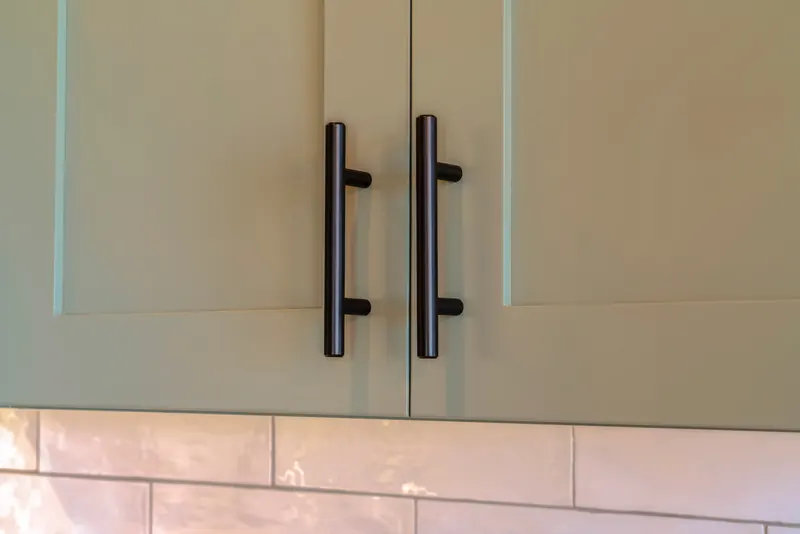
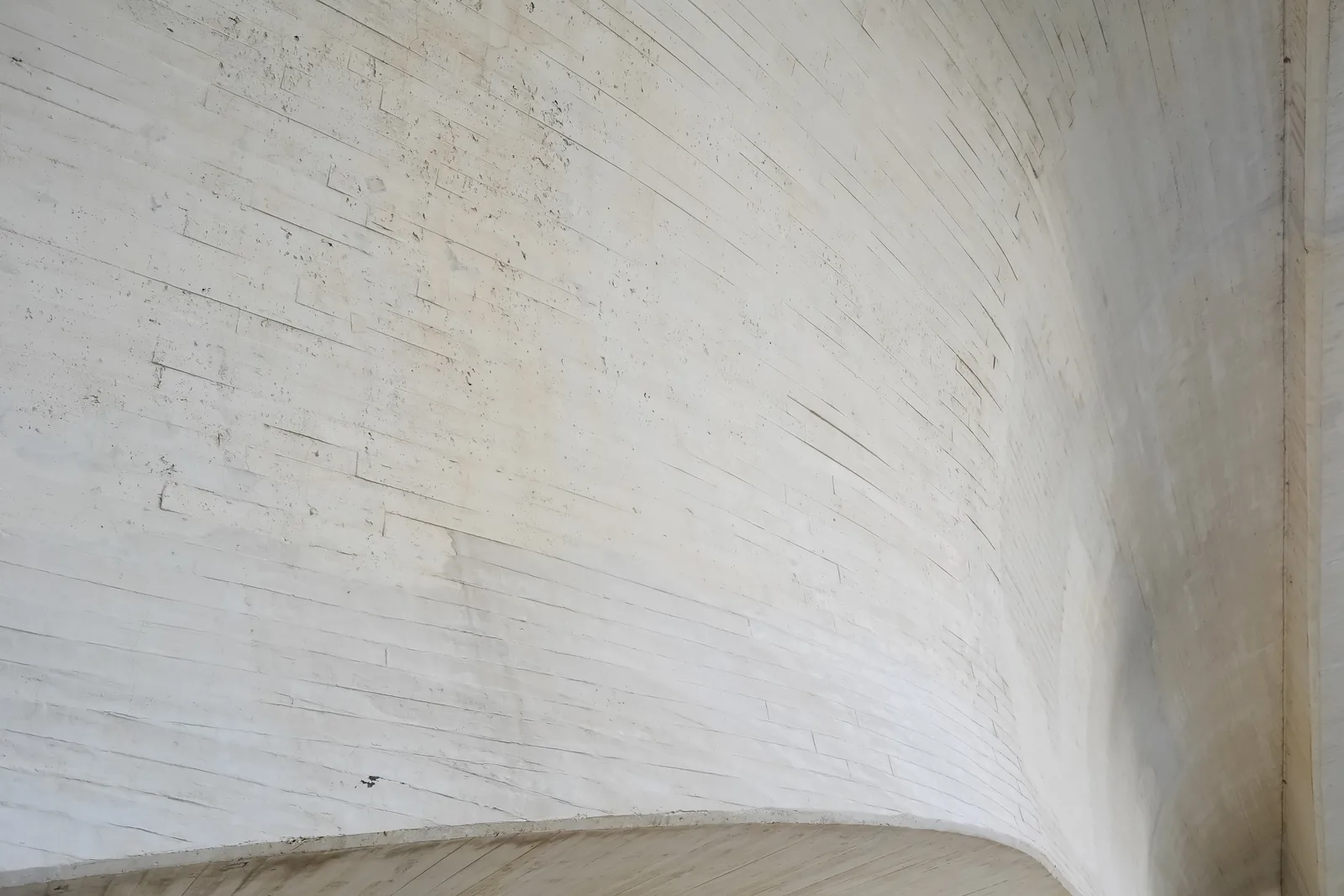
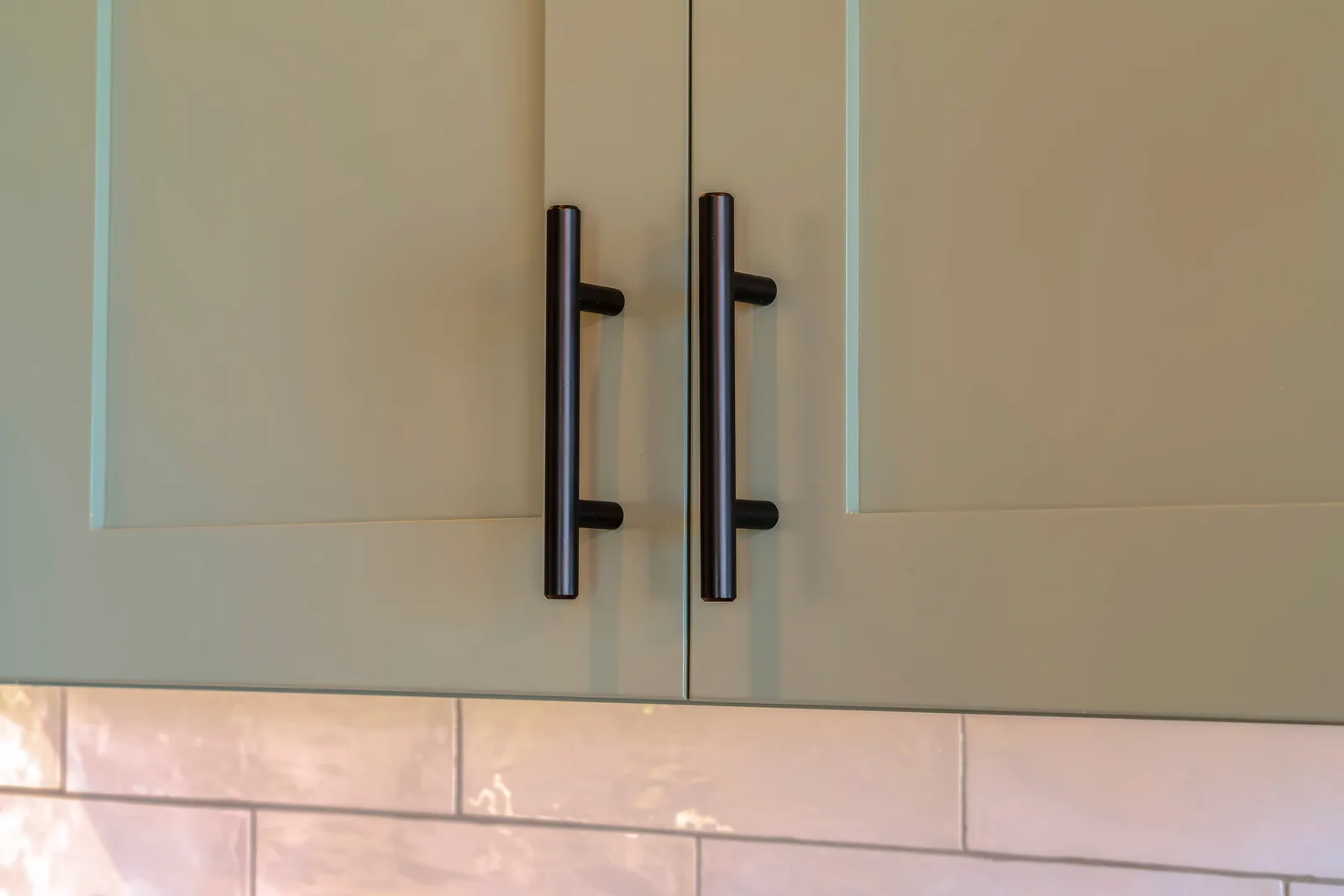
This is the step that separates the style from its imitations: honest materials, visibly honest. Clay that is actually clay, iron with hammer marks, plaster with movement. Two material moves carry outsized weight. The first is the wall itself: a limewash or Roman clay finish gives drywall the soft mineral movement of adobe for roughly $185 to $235 per accent wall, and it is the single most transformative DIY in the territory. The second is the metal: hand-forged iron at the hardware level, where hands actually touch it, before any decorative metal goes near a wall.
Where to go deeper: the full finish comparison with costs per square foot is in adobe-inspired walls, and the metal hierarchy with its recognition tests is in western metal done right.
Step 3: The Anchor Pieces
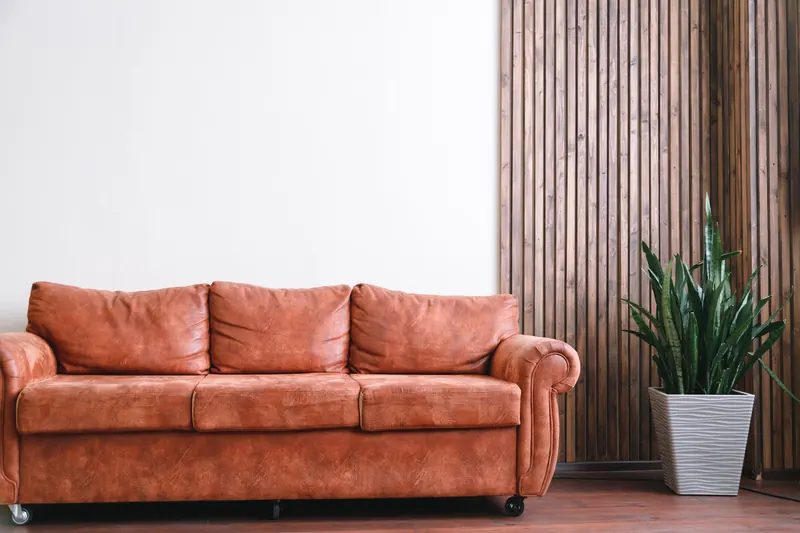
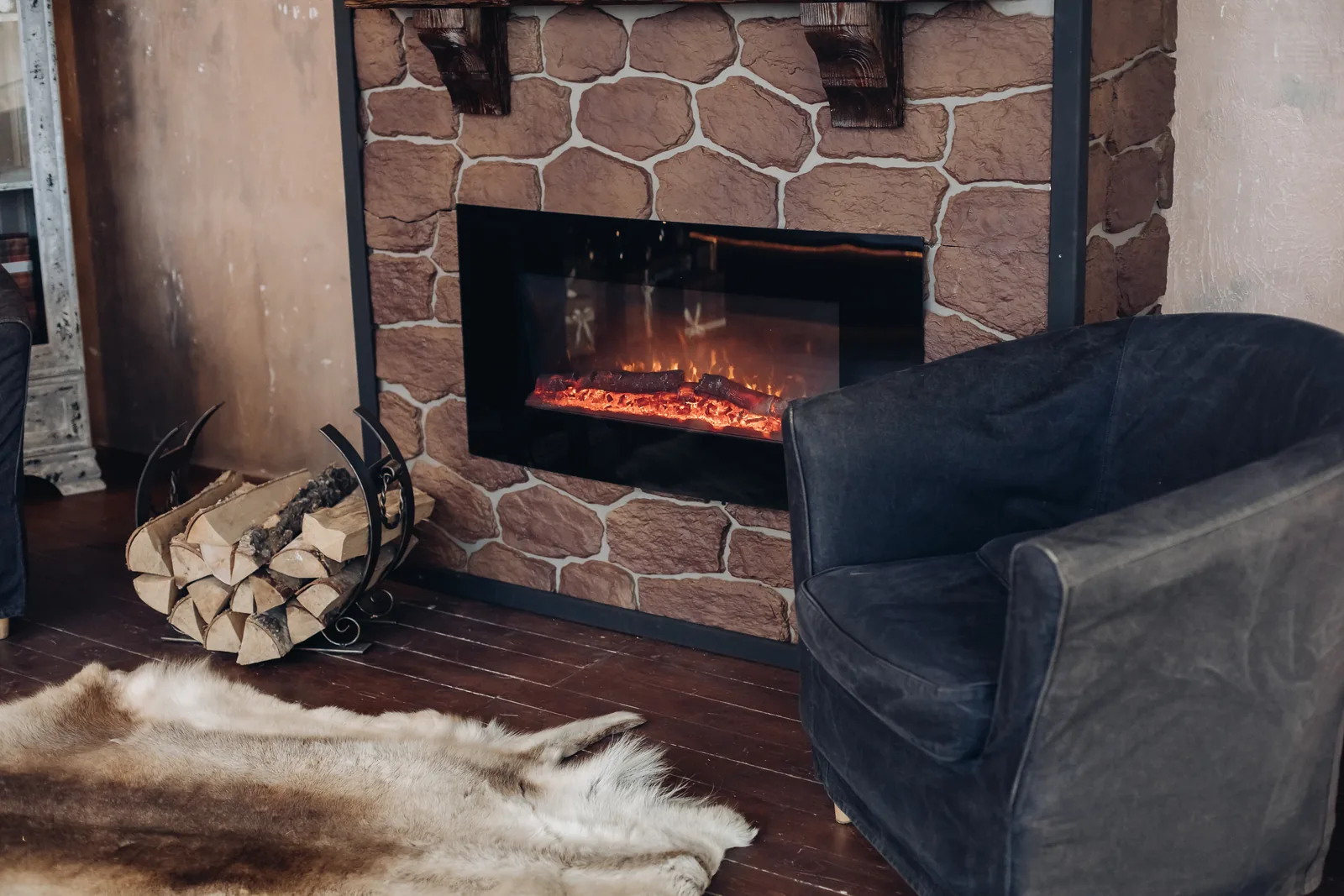
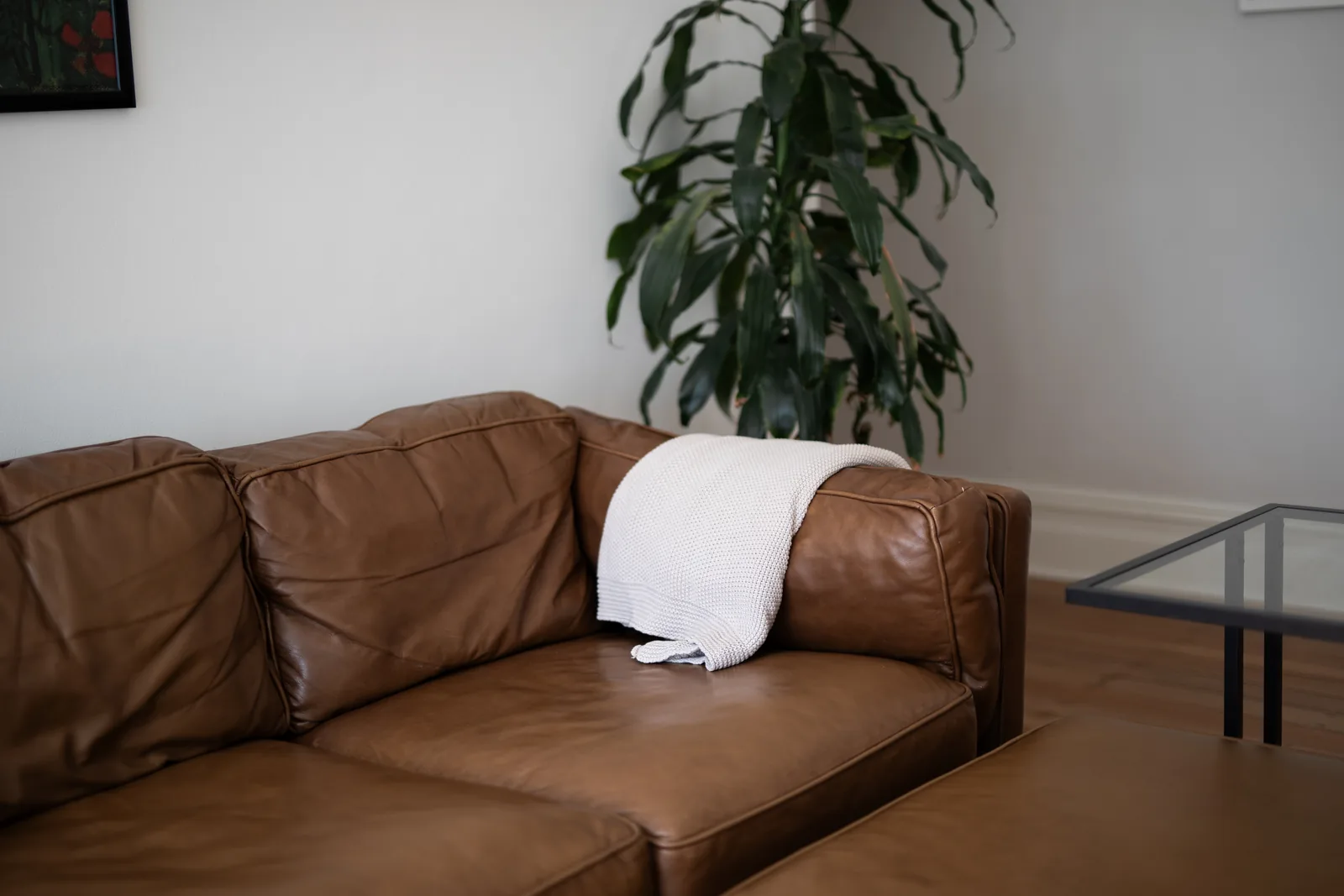
Every room in the family is organized around one heavy anchor and one grounded floor. The anchor is almost always leather: a broken-in cognac sofa or chair whose patina does the room’s storytelling, bought once from the $2,200 to $3,000 top-grain tier (or secondhand at a steal, which is this territory’s best-kept shopping secret). The floor is a layered pair: a jute or flatweave base with a real cowhide angled across it, the combination that reads collected instead of carpeted.
Where to go deeper: the full leather tier guide and the spend-versus-save map are in ranch style living room ideas, and the real-versus-faux verdict with its cost-per-year math is in the cowhide guide.
Step 4: Textiles
Textiles are where the palette becomes touchable and where most of the budget flexibility lives. The hierarchy: one heritage-weight wool camp blanket as the statement (the $150 to $330 heirloom tier, or its honest $45 to $110 wool-blend understudy), then supporting throws and cushions in the palette, then the handwoven pieces that connect the room to actual craft traditions. One patterned textile per zone; the restraint is the style.
Where to go deeper: the blanket tiers, the heirloom math, and the six layering placements are in the camp blanket guide, including the cultural precision on what these blankets are and are not.
Step 5: The Dosage Rule
The step that keeps the whole thing out of the theme park. The 70/20/10 Desert Rule, our proportion system introduced in the southwestern guide, generalizes across the entire family: 70 percent warm quiet (the creams and neutrals), 20 percent the signature material or color (clay tones, or leather-and-wood mass in the western branch), 10 percent accent (sage, iron, turquoise, one horseshoe doing a job). Every mistake list in every guide below is, at bottom, a dosage violation. Master this one ratio and the style forgives everything else.
Where it started: the 70/20/10 Desert Rule.
Room-by-Room Quick Map
| Room | The 3 moves | Typical budget | Read this |
|---|---|---|---|
| Living room | Palette + leather anchor + layered floor | $180–450 refresh; $3,500–5,000 full build | #1, #7, #5 |
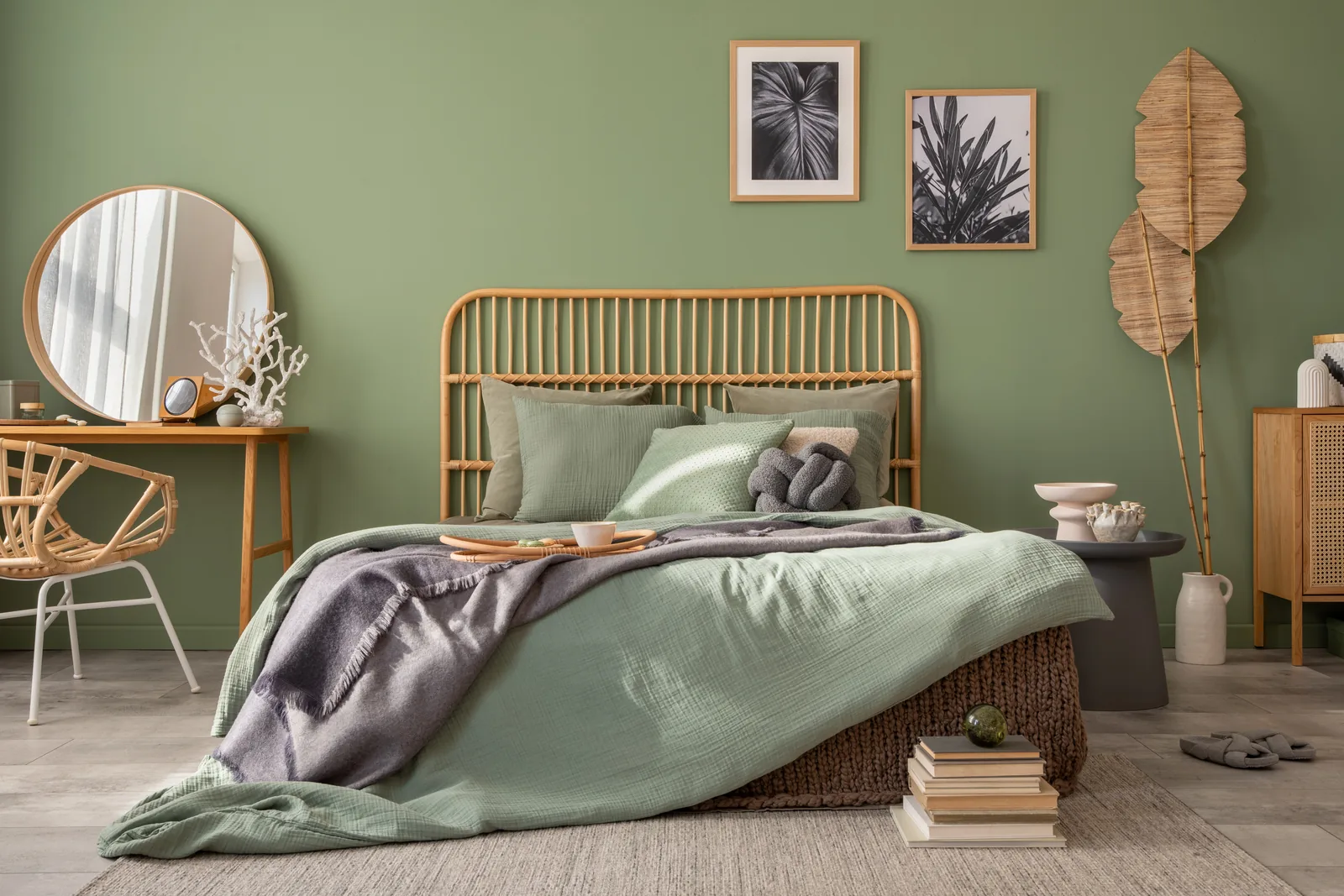
| Bedroom | Cream bedding field + sage lead + one blanket statement | $150–400 | #10, #18 |
| Kitchen | Forged hardware swap + clay dinnerware + one runner | $160–260 | #22, #1 |
| Feature wall | Limewash or Roman clay in a shade from the paint guide | $185–260 | #15, #2 |
| Entry | Bench + iron hooks + one pot cluster | $110–260 | #1, #22 |
| Bathroom | Rust-led small-room play from the palette ratios | $60–150 | #10 |
Budget Reality Check
Consolidating every receipt and price check across the eight guides, here is what the territory honestly costs, July 2026 numbers:
The $250 weekend. A convincing southwestern refresh of one room: throw, pot cluster, runner, and the Under-$100 Textile Test running the palette. This tier is real, and it is where everyone should start.
The $500 to $900 room. The refresh plus one material move: the limewashed wall, or the full forged hardware swap, or the real cowhide. One material move per room is also the correct pace; the style is supposed to look accumulated.
The $3,500 to $5,000 anchor build. The full ranch living room with the leather sofa doing $2,000-plus of the work. This is furniture-cycle money, spent once a decade, and the spend-versus-save map in the ranch guide exists to aim it.
The trap tier. There is no amount of money that buys the collected look in one order. Six months and $900 spent deliberately beats one afternoon and $5,000 spent at a single retailer, every time, and that is not a philosophy, it is how the style visibly works.
The 7 Mistakes (Across All Substyles)
Synthesized from every mistakes section in the cluster, the seven that account for nearly all failures:
- The total look. Every item on-theme means no item reads as taste. The 70/20/10 ratio exists to prevent exactly this.
- Props instead of materials. Wagon wheels, sombreros, horseshoe walls, giant stars. If it performs western instead of working, it is set dressing. (I have personal history here; the wrought iron guide has the star story.)
- Cool gray anywhere near the palette. Gray undertones and clay undertones fight, and both lose. Warm neutrals only.
- Shine. Glossy leather, shiny “iron,” lacquered finishes, plastic-bright picks. The entire family is matte; sheen is the impostor’s tell across every category.
- Merging the substyles unknowingly. A farmhouse-white room with one cowhide is not ranch; a ranch room with terracotta walls is fighting itself. Pick a column from the family tree and follow its rules.
- Everything new, all at once. The one-retailer room photographs like a showroom because it is one. Thrift, inherit, layer over months.
- Skipping the sample and the swatch. The wrong terracotta gallon, the aluminum “iron,” the acrylic “wool”: every category has its impostor, and every guide below has its ten-second test.
FAQ
What is the difference between western and southwestern decor?
Western decor is the leather-and-iron interior tradition of ranch culture: heavy, brown-toned, grounded in stone and wool. Southwestern decor is the clay-and-textile tradition of the desert: lighter, warmer, built on terracotta, sage, and handwoven pieces. Same landscape, different hours: southwestern is the desert at noon, western is nightfall by the fire.
How do I start decorating in this style?
Follow the five steps in order: choose your palette temperature first (the Sunbaked system of rust, sage, cream, and mustard), then materials, then one anchor piece, then textiles, then apply the 70/20/10 dosage ratio. The honest starting budget is about $250 for one room: a throw, clay pots, a runner, and the palette in textiles.
What are the key elements of southwestern decor?
A warm palette anchored by terracotta and sage over a cream field, natural materials (clay, handwoven wool, leather, iron, raw wood), and restraint in proportion: roughly 70 percent warm neutrals, 20 percent clay tones, 10 percent accent. Handcrafted texture matters more than any single object; the style is a material system before it is a color scheme.
Is western and southwestern decor expensive?
It scales honestly. A convincing one-room refresh runs $180 to $450; adding one material move (a limewashed wall at roughly $200, a forged hardware swap at $120 to $180, a real cowhide at $250 to $450) reaches $500 to $900; and the once-a-decade leather anchor build runs $3,500 to $5,000. The style also thrifts better than almost any other.
Is southwestern decor still in style in 2026?
Yes, and it has crossed from revival to staple: the market-wide shift from gray to warm neutrals made terracotta, clay, and sage permanent fixtures in mainstream paint and retail collections, and the material-first version of the style (limewash, forged iron, real wool) has replaced the themed version. The current form is restraint, which does not date.
What is the difference between ranch style and farmhouse?
Ranch is dark and material-heavy: broken-in leather, raw stone, iron, and wool in browns and tans. Farmhouse is light and painted: white shiplap, cotton, and greige. They share rural roots and opposite palettes, and the sofa usually tells you which room you are in. A room genuinely cannot be both, which is why the family tree above draws the border.
The Territory, In One Sentence
Warm palette, honest materials, one anchor, layered textiles, and the discipline of 70/20/10: that is the entire style family, and everything else is detail, which is what the eight guides are for. It is also a wardrobe, by the way; this style has a direct clothing equivalent, piece for piece, and the western chic system in the western chic starter guide is this exact aesthetic worn instead of hung. The places that taught all of it are real and drivable: the light starts in the Sedona to Marfa itinerary and refuses to end in Marfa.
Save this page, join the newsletter for the seasonal layers as they publish, and pin the taxonomy from our Sunbaked Homes board. Then go buy three clay pots and start at step one.
Prices in this guide were checked at publication and are shown as typical ranges. How we check facts and prices →