Metal is western style’s best friend and its fastest route to steakhouse decor, and the line between the two is thinner than a horseshoe nail. I know because I have been on both sides of it: the giant Texas star I bought in an enthusiastic weekend hung over my mantel for exactly eleven days before I took it down, and the hole it left got filled by something better, which was restraint. The star now lives in the garage, facing the wall, as a monument.
This article is the doctrine that came out of that star: which metals are worth your money and how to tell them apart in ten seconds, why the hardware drawer beats the wall as a starting point, and the one-horseshoe rule that keeps the whole category on the right side of the line.
The 3 Metals (and How to Tell Them Apart)
| Metal | Weight | Texture | Typical price (cabinet pull) | Verdict |
|---|---|---|---|---|
| Hand-forged iron/steel | Heavy for its size | Irregular hammer marks, no two identical | $8–15 | The real thing; buy it wherever it matters |
| Cast iron | Heavy | Uniform, faint mold seams, sometimes grainy | $4–8 | Honest middle; fine for brackets and hooks |
| Painted aluminum or pot metal | Suspiciously light | Smooth, perfect, repeated | $2–4 | The impostor tier; skip it where hands touch |
The three ten-second tests, usable at any flea market table:
- The weight test. Pick it up. Iron announces itself; aluminum apologizes. A “wrought iron” curtain bracket you can lift with two fingers is neither wrought nor iron.
- The magnet test. Carry a fridge magnet in your bag (I do, since the star era). Iron and steel grab it firmly; aluminum ignores it completely. This one test retires most flea-market fiction on the spot.
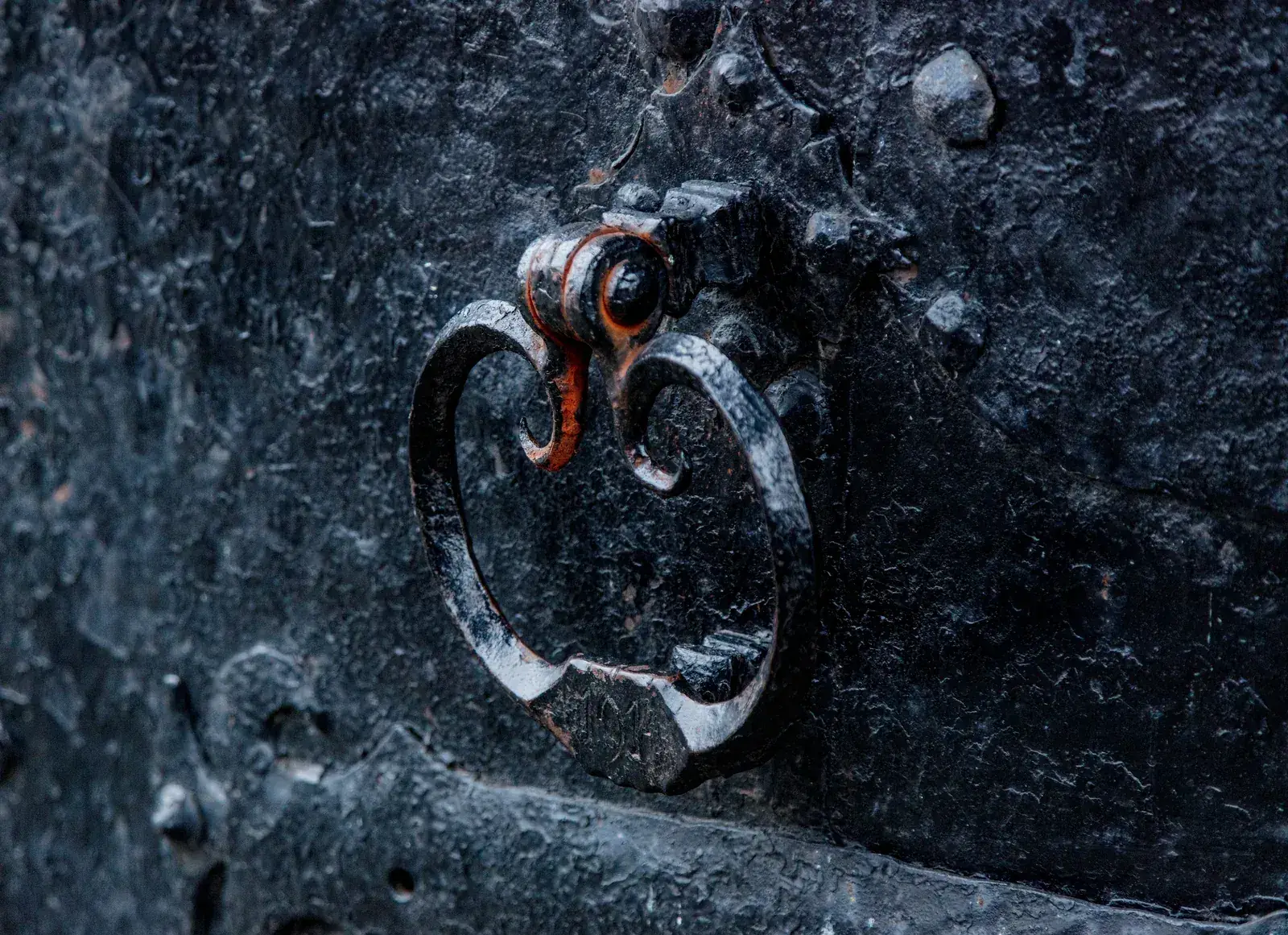
- The texture test. Run a thumb along the surface. Hand-forging leaves irregular hammer facets that catch light unevenly, and no two pieces match. Casting leaves faint seam lines where the mold halves met. Perfectly smooth and identical across ten pieces means a factory, a mold, and probably aluminum.
The Hardware-First Rule
Here is the doctrine in one sentence: start western metal at the hardware level, ten forged cabinet pulls before one decorative wall piece, because hardware is metal doing a job and wall metal is metal doing a performance.
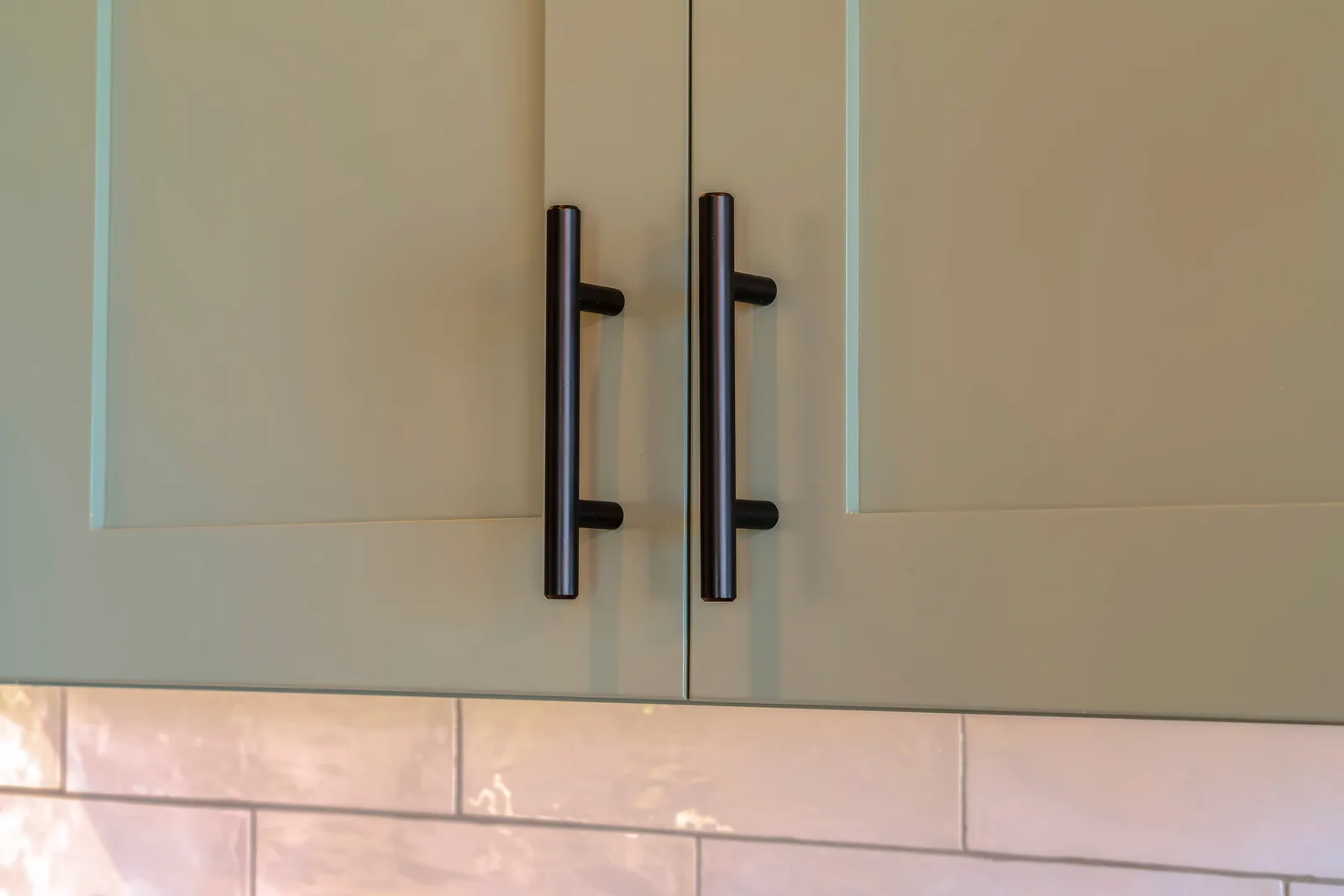
The logic holds up to touch and to math. Hardware gets handled twenty times a day, which is exactly where hand-forged quality registers: the weight in the fingers, the hammer facets under the thumb. And the numbers work: a full kitchen swap of 12 forged pulls at $10 to $15 each runs $120 to $180, checked July 2026, installs in an afternoon with a screwdriver, and shifts the entire room’s material story more than any $180 wall piece could. I did mine over a single Saturday morning, and the before-and-after gap embarrassed the before: same cabinets, different kitchen. It remains the highest return-per-dollar move in the whole western decor playbook.
Where Iron Works
Kitchen Hardware
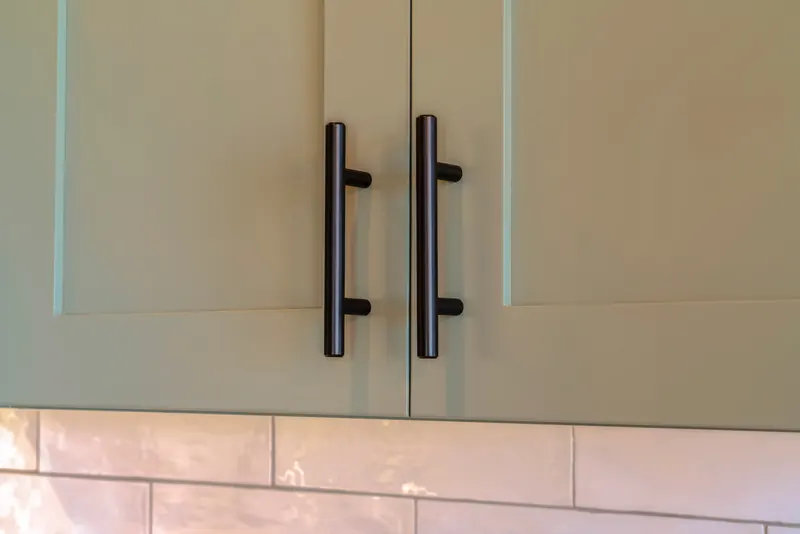
The starting line, per the rule above. Matte black forged pulls and knobs against warm wood or painted cabinets, mixed finishes forgiven (forged pieces never match perfectly, which is the point). Avoid the glossy powder-coat sets sold as “farmhouse iron”; the shine is the tell.
Curtain Rods and Brackets
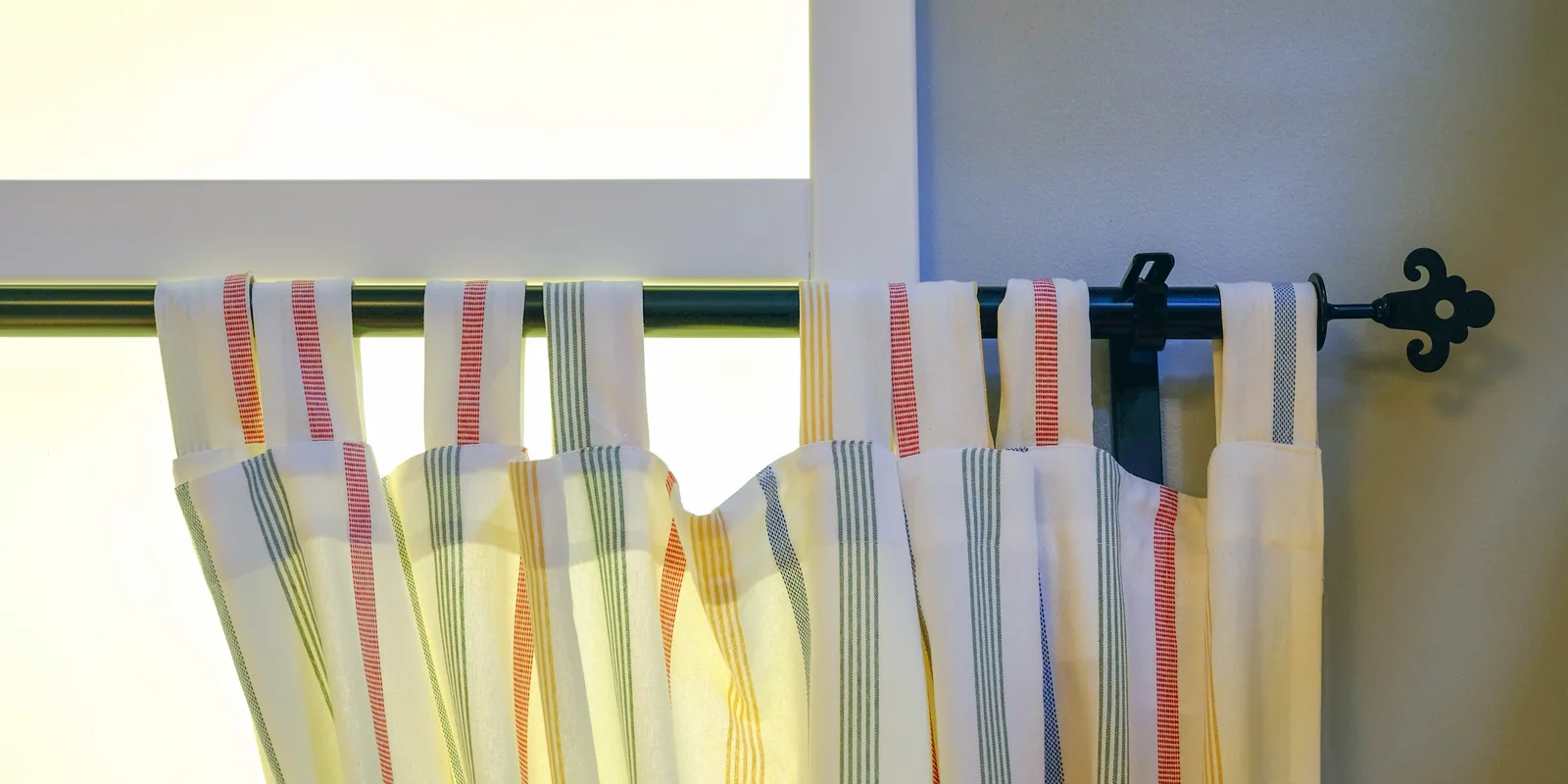
The second-best entry: a hand-forged rod with hammered brackets runs $60 to $120 per window from independent smiths, versus $25 for the big-box aluminum version, and it is the difference between drapery hanging on architecture and drapery hanging on a prop. One window at a time is a legitimate strategy.
Lighting
Iron chandeliers and sconces carry a room’s gravity the way nothing else in the style does, and the weight test matters most here: real iron fixtures hang with visual mass that spray-painted aluminum cannot fake at any angle. The full lighting doctrine lives with the rest of the room in ranch style living room ideas.
Outdoor and Porch
Where iron is happiest: hook rails for the porch, a boot scraper that actually scrapes, gate hardware, plant brackets. Outdoor pieces can go cast iron without apology; weather does the patina work, and function excuses everything out here.
The Horseshoe Question
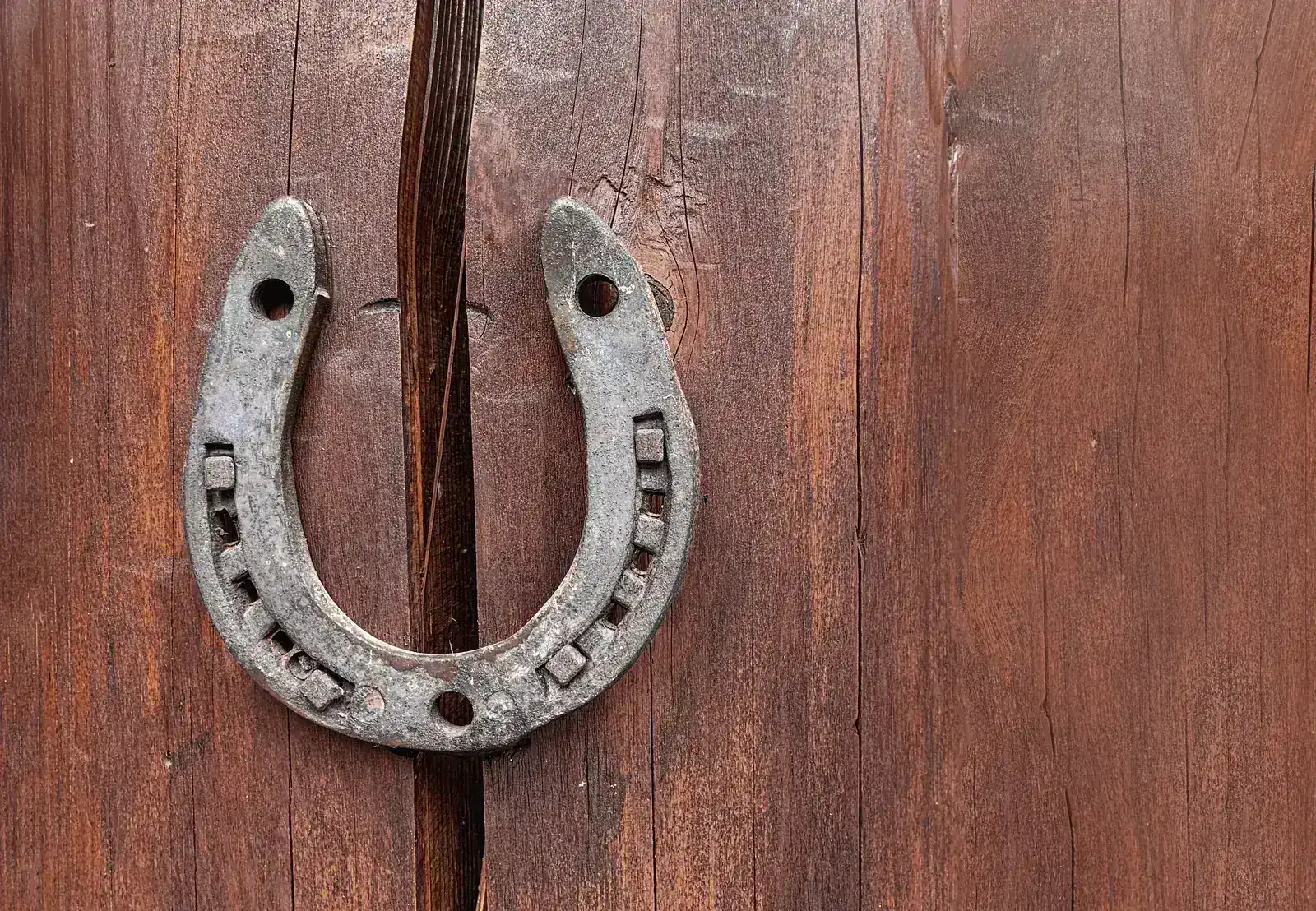
The doctrine: one horseshoe piece per home, maximum, and it should be a horseshoe doing something. Four that pass:
- A single horseshoe hook by the door, holding the dog leash. Function first, symbol second.
- A horseshoe bottle opener, mounted inside the pantry door or on the porch post. The best conversation-per-square-inch ratio in the category.
- The DIY trivet: three old shoes, cleaned with a wire brush and sealed with matte spray, wired flat at their touch points into a triangle. An hour, about $8 if you buy the shoes at a flea market, and genuinely useful under a Dutch oven.
- A small forged hook rail incorporating one shoe, from an Etsy smith, in the mudroom.
And the five that never pass, no appeals: the horseshoe wreath, the horseshoe cross cluster, the twelve-shoe boot rack, horseshoe napkin rings for daily use, and the giant star’s cousin, the horseshoe longhorn silhouette. Each one is the steakhouse calling.
Which returns me to my star. The lesson it taught, at $45 plus eleven days of squinting at my own mantel: decorative western metal is a statement piece category, and statement pieces obey the same one-per-room law as everything else in this style. The star was not wrong; the star plus the blanket plus the cowhide plus the iron lamp was a themed booth. One earner per wall, and let the hardware carry the rest invisibly.
Buying Real Hand-Forged
- Etsy blacksmiths are the golden channel, and the listings tell you who is real: look for the words “hand forged” with process photos of the actual forge, per-piece variation acknowledged in the description (“each pull is unique”), and made-to-order lead times of one to three weeks. The smiths say it themselves in their shop notes: if every piece in the photo is identical, it did not come off an anvil. Typical honest ranges: pulls $8–15, hooks $10–20, rods $60–120, brackets $15–30.
- Salvage and architectural yards are the patina jackpot: old gate hardware, strap hinges, and window grilles at scrap-adjacent prices, magnet test in hand.
- Antique trails do the same with better stories; the Hill Country circuit from small towns worth the antiquing drive is a legitimate iron-hunting itinerary.
- The flag to walk past: “wrought iron style” and “iron look” in any listing. Style and look are the industry’s confession nouns.
Mistakes
- The giant Texas star. Mine lasted eleven days. Yours will too, or worse, it will not.
- The all-matching glossy set. Twelve identical shiny pulls read factory; forged pieces vary, and the variation is the luxury.
- Aluminum sold as forged. The magnet in your bag costs a dollar and never lies.
- Metal on every wall. Iron is gravity; a room needs exactly some. The hardware carries most of it invisibly, which is the whole rule.
- Skipping the wire brush on flea-market finds. Ten minutes of brushing and a matte seal coat is the difference between rustic and rusty on your linens.
FAQ
What is the difference between wrought iron and cast iron?
Wrought (hand-forged) iron is shaped by hammering, leaving irregular facets and no two identical pieces; cast iron is poured into molds, uniform with faint seam lines and more brittle. Both are heavy and magnetic. The impostor to screen out is painted aluminum: light, perfectly smooth, and indifferent to a magnet.
How do you decorate with horseshoes without it looking cheap?
One horseshoe piece per home, and choose one that works for a living: a single door hook, a mounted bottle opener, a wired trivet, or one smith-made hook rail. Multiples and pure-symbol pieces (wreaths, crosses, silhouettes) are what tip a room into steakhouse territory.
Where do you buy real hand-forged hardware?
Independent blacksmiths on Etsy (screen for forge process photos, acknowledged per-piece variation, and made-to-order lead times), architectural salvage yards, and antique trails. Expect $8 to $15 per forged cabinet pull and $60 to $120 for a forged curtain rod; carry a magnet to retire the aluminum pretenders.
Is wrought iron out of style?
No; it has moved, not left. The ornate scrollwork era is dormant, but hand-forged hardware, simple iron lighting, and matte black rods are core to current ranch, farmhouse, and southwestern rooms. The modern usage rule is function-forward: iron working as hardware everywhere, iron performing as wall decor almost nowhere.
Start at the Drawer, Not the Wall
Ten forged pulls, one working horseshoe, a magnet in your bag, and the star stays in the store. That is the entire doctrine, and it is the last supporting beam of this territory: the complete western decor guide it all builds toward is next. Until then, the room that hosts all this metal is in ranch style living room ideas, and the textiles it plays against are in the camp blanket guide.
Prices in this guide were checked at publication and are shown as typical ranges. How we check facts and prices →