The Texas Panhandle is the segment of Route 66 that everyone drives through and almost no one drives to. Around 180 miles of flat, windy, dead-straight I-40 frontage, and I am not going to pretend otherwise. But hidden in that flatness are the most famous roadside attraction on the entire route, the exact mathematical middle of the Mother Road, and a slice of pie with a cult following.
This is the third segment in our Route 66 series, after Route 66 in Arizona and Route 66 in New Mexico. Same format as always: the honest table, the verdicts, and the practical answers the brochures skip. This time that mostly means one question, asked three ways: what exactly do I do at Cadillac Ranch?
The Segment at a Glance
Driving classic direction, east to west:
| Stop | Where | Time needed | Verdict |
|---|---|---|---|
| U-Drop Inn | Shamrock | 20 to 30 min | Stop. The prettiest building on the Texas 66. |
| Leaning Tower of Texas | Groom | 5 min | Roll-down-the-window photo, keep moving. |
| The Big Texan | Amarillo | 1 to 1.5 hrs | Stop for the spectacle, not the challenge. |
| Cadillac Ranch | West of Amarillo | 45 min to 1 hr | The non-negotiable. Details below. |
| Midpoint Café | Adrian | 30 to 45 min | Stop. The halfway sign plus the pie. |
Total drivable in one comfortable day, and the one-day plan is at the bottom.
Cadillac Ranch: The Full How-To
Ten Cadillacs, model years 1949 through 1963, buried nose-down in a Panhandle field, and yes, you are supposed to paint them. Here is everything the two-line guidebook entries leave out.
The basics first: it is free, it is open 24/7, and it sits along the I-40 frontage road just west of Amarillo. You park on the shoulder by the gate and walk a few hundred yards into the field. There is no ticket booth, no gift shop, no fence that matters. Just the cars, the wind, and whoever else had the same idea that hour.
The Spray Paint Question
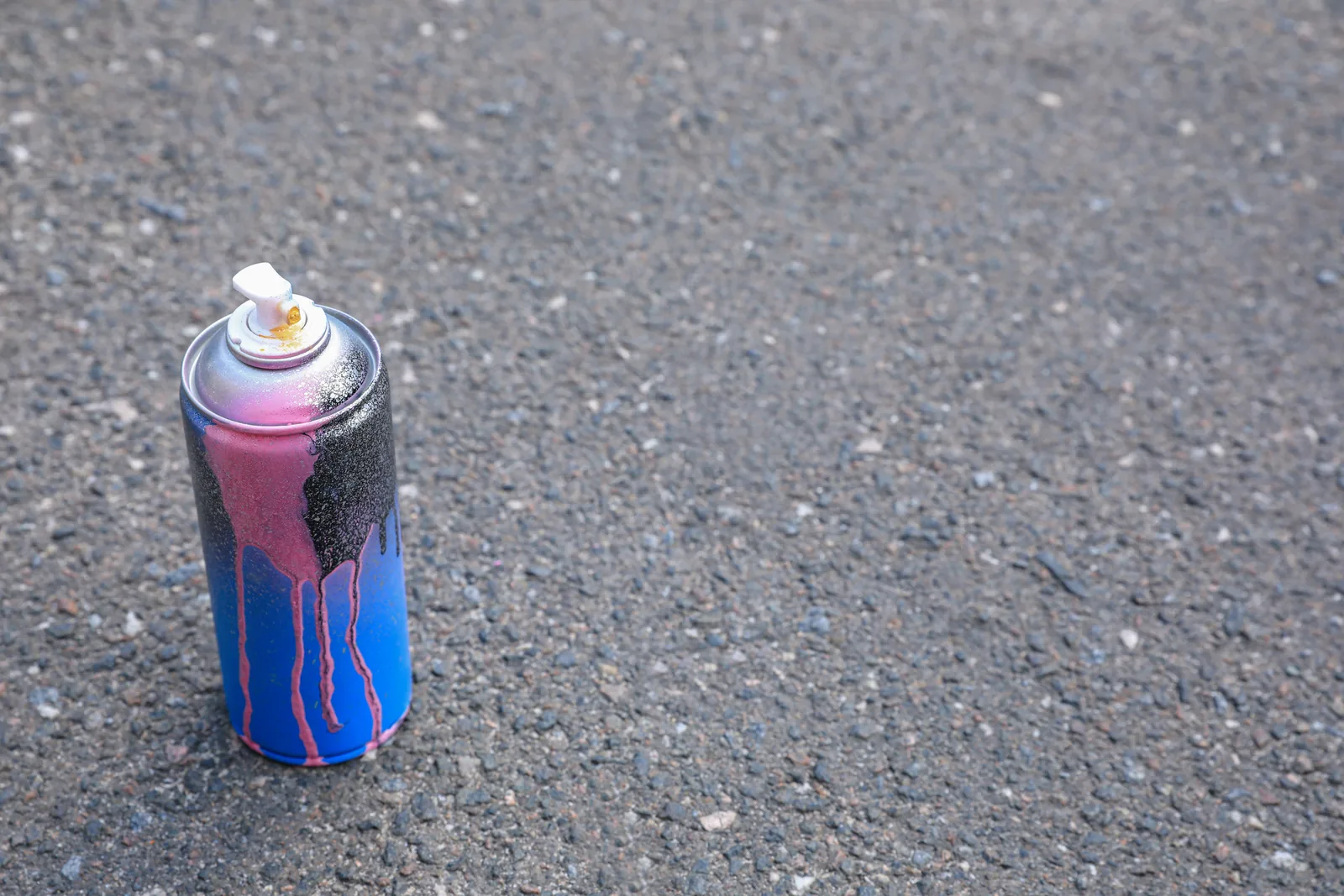
Yes, painting is allowed. More than allowed, it is the entire point. The installation is designed to be endlessly repainted by visitors, which means your masterpiece is also temporary. I painted a message on a tailfin one evening and watched it disappear under someone else’s coat of neon green before I had even walked back to the car. Twenty minutes, roughly. That is not vandalism of your work. That is the artwork working.
Practical notes:
- Bring your own can. Around $6 for a can of spray paint at any Amarillo big-box or hardware store, checked July 2026. Grab it in town before you head out.
- There are often half-used cans lying in the dirt. Shaking a stranger’s abandoned can and finding paint in it is a small Route 66 joy, but do not count on it.
- Pack the cans out. Empties in the field are the one genuinely ugly thing about the place. Be the person who leaves with more cans than she brought.
- Wind check. The Panhandle wind is a co-artist whether you invite it or not. Paint with the wind at your back or wear the overspray home.
Best Time to Go
Golden hour, no contest. The cars throw long shadows across the field, the paint colors go warm, and the light an hour before sunset is the photo you came for. Sunrise works too and you may have the field to yourself.
The warning nobody prints: do not go right after rain. The walk in is plain Texas dirt, and wet, it becomes a boot-swallowing gumbo mud that I have personally donated a shoe’s dignity to. If it rained that morning, do the rest of the segment first and circle back once the field drains.
The Story, in 60 Seconds
The installation went up in 1974, created by the San Francisco art collective Ant Farm and bankrolled by Amarillo’s famously eccentric millionaire Stanley Marsh 3. The ten Cadillacs trace the rise and fall of the tailfin era, and they are buried nose-down at an angle popularly said to match the Great Pyramid of Giza. In 1997 the whole row was dug up and moved about two miles west to escape Amarillo’s growth, paint layers and all. Fifty years on, the paint is now inches thick in places, a geological record of every road tripper before you.
The Other Worthy Stops
Midpoint Café, Adrian
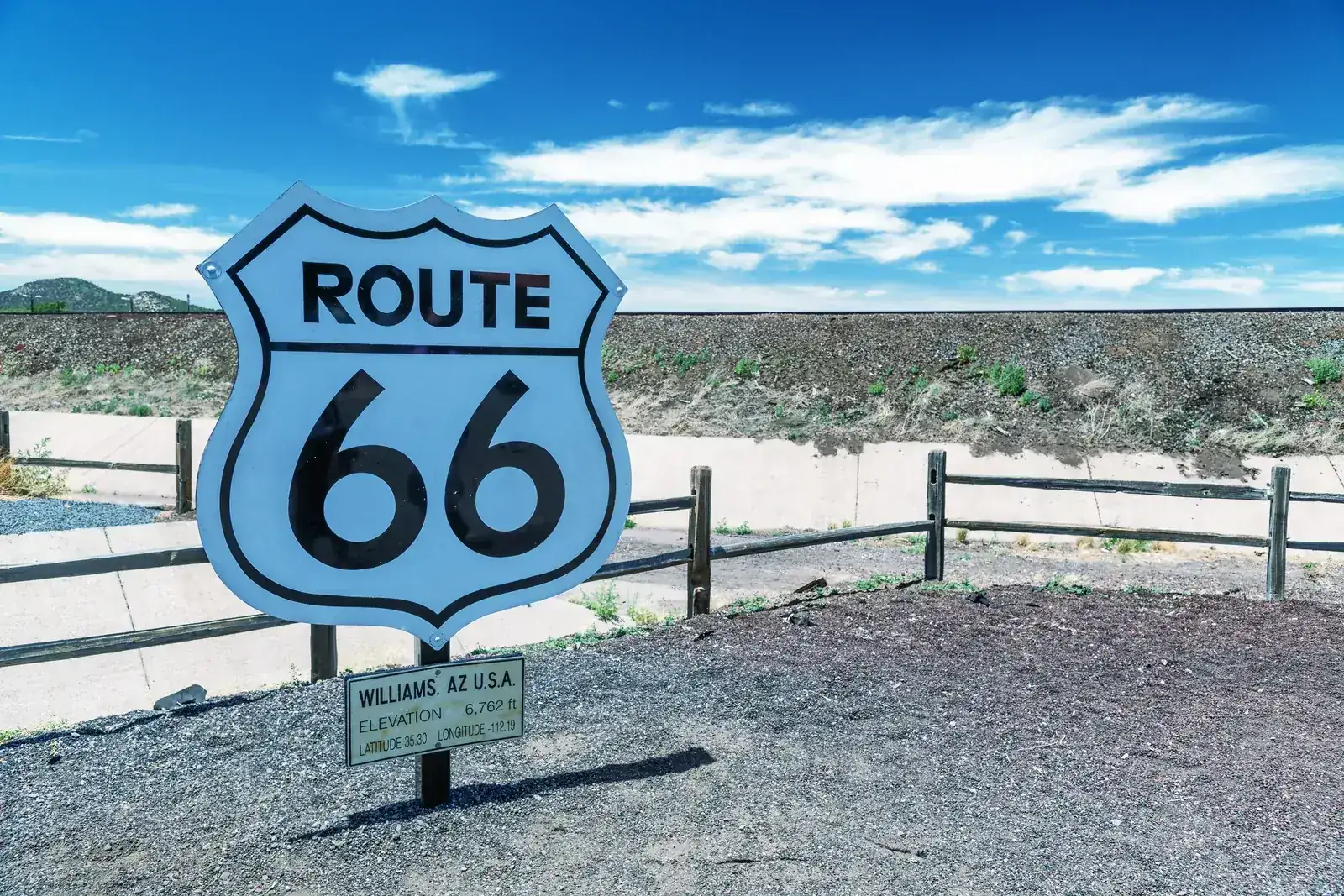
The sign outside Adrian, Texas says it plainly: 1,139 miles to Chicago, 1,139 miles to Los Angeles. This is the geographic midpoint of Route 66, and the selfie with the sign is mandatory in the good-natured way that Route 66 rituals are.
The café behind the sign is the reason to linger. The house specialty is the “ugly crust pie,” a homemade pie whose crust is folded rough on purpose, and my slice cost around $6 to 7, checked July 2026. Order it, sit at the counter, and understand that you are exactly halfway. One planning note: it keeps small-town café hours: when we checked in November 2026, listings showed the kitchen serving breakfast and lunch only, wrapping up by mid-afternoon, with a couple of weekdays off. It has also traditionally closed for the winter and reopened in spring, so pie is a lunch-side ambition, not a sunset one, and an off-season trip needs a call ahead (806-536-6379).
U-Drop Inn, Shamrock
A 1936 Art Deco Conoco station and café wearing a tower like a jukebox wearing a crown, and easily the most photogenic building on the Texas stretch. If it looks familiar, that is because it inspired Ramone’s body shop in the movie Cars, a fact that has delighted every child dragged out of a backseat here since 2006. It is beautifully restored and functions as Shamrock’s visitor center. Go at dusk if you can, when the neon comes on, green and red against the prairie dark.
The Big Texan, Amarillo
The home of the 72-ounce steak challenge: finish the steak and the full sides in under an hour and the meal is free. My honest take, and the reason this section exists: go for the spectacle, skip the challenge. The dining room is a glorious fever dream of Texana, the challengers eat on a raised stage under a countdown clock, and watching a confident man meet four and a half pounds of beef is better dinner theater than most dinner theater. A normal-size steak off the regular menu runs roughly $30 to 45, checked July 2026, and arrives without a stopwatch. That is the move.
The Leaning Tower of Texas, Groom
A water tower deliberately installed at a Pisa-worthy tilt as a truck stop marketing gag decades ago. It takes five minutes, it costs nothing, and it is exactly the kind of roadside absurdity this highway was built on. Photo, smile, drive on.
The Honest Truth About This Stretch
It is flat. It is windy. The horizon does not change for an hour at a time, and the towns between the stops are more past tense than present. If you come expecting Arizona’s red rocks or New Mexico’s neon nights, the Panhandle will feel like the intermission. Come expecting the intermission, and something shifts: the sky gets enormous, the wind farms turn like slow applause, and the emptiness starts reading as the point rather than the problem. This was always the stretch that made travelers earn the West. It still is, and that is OK.
The One-Day Plan
- Morning: Coffee in Shamrock, walk the U-Drop Inn while the light is soft. (If you can engineer it, dusk here is even better, see the note below.)
- Late morning: Groom for the leaning tower, five minutes, back on the road.
- Lunch: Amarillo at The Big Texan, off the regular menu, watching someone else attempt the 72.
- Mid-afternoon: West to Adrian for the midpoint sign and the ugly crust pie, before café closing time.
- Golden hour: Backtrack the 25-ish easy minutes to Cadillac Ranch, paint can from the Amarillo hardware run in hand, for the light the field was made for.
- Night: Sleep in Amarillo. One booking note: check the events calendar before assuming a walk-in room, because a single arena concert can empty the town of beds.
Westbound alternative: flip the day, hit Cadillac Ranch at sunrise instead, and catch U-Drop Inn’s neon at dusk on your way into Oklahoma. Both versions work. The pie’s hours are the fixed constraint either way.
Mistakes
- Cadillac Ranch right after rain, in sneakers. The mud is a legend for a reason. Wait for the field to drain or pack boots you do not love.
- Blowing past Adrian. The midpoint is a 90-second exit off your route and the halfway photo is the one you will actually frame.
- Arriving in Amarillo at 9 p.m. without a reservation on a concert night. Ask me about the front seat of my own car sometime. Check the calendar, book the room.
- Attempting the 72-ounce challenge because the table dared you. The stage is fun. The stage is also where lunch goes to win.
- Forgetting the spray paint in town. There is no paint aisle at the field. The Amarillo hardware stop is part of the itinerary, and per the zone packing system, the can rides in the trunk, not the cockpit.
FAQ
Can you spray paint at Cadillac Ranch?
Yes, and it is encouraged. The installation is meant to be continuously repainted by visitors. Bring your own can, around $6 in Amarillo, spray whatever you like, and take your empties with you. Expect your work to be painted over within hours, sometimes minutes. That turnover is part of the artwork.
Why are the Cadillacs buried nose down?
The Ant Farm collective installed the ten cars in 1974, angled nose-down into the field, at a tilt popularly said to match the slope of the Great Pyramid of Giza. The lineup of model years from 1949 to 1963 was chosen to chart the rise and fall of the Cadillac tailfin.
Where is the halfway point of Route 66?
Adrian, Texas, marked by the Midpoint Café sign: 1,139 miles to Chicago in one direction and 1,139 miles to Los Angeles in the other. The café’s ugly crust pie is the traditional way to celebrate the math.
Is the Big Texan 72 oz steak challenge worth doing?
Worth watching, rarely worth attempting. The challenge means the steak plus all the sides in under an hour, on a stage, and most challengers pay for the privilege of losing. The regular menu serves the same theater with none of the stopwatch, for roughly $30 to 45 a steak.
Halfway There, Paint on Your Hands
That is the Panhandle: one world-famous field, one perfect pie, one neon crown, and 180 honest miles of sky. The segment before this one is Route 66 in New Mexico, the one that started the series is Route 66 in Arizona, and if the Panhandle’s flatness sells you on the other Texas, the rolling antidote is small towns in the Hill Country.
Prices in this guide were checked at publication and are shown as typical ranges. How we check facts and prices →