Most road trip packing lists have 90 items on them. About 60 of those will ride along for a week and never leave the trunk. This list is different in one specific way: it is organized by where things live in the car, not by what category they belong to. Sunscreen next to the driver is useful. Sunscreen buried under a duffel is decoration.
I learned this the annoying way. Somewhere past Holbrook, Arizona, my phone hit 4 percent with the motel confirmation sitting in my email and my charger sitting on my kitchen counter, 900 miles behind me. The gas station charger that rescued me cost around $30 and died within the month, checked against my own receipts, sadly. That trip is why the charger is now item one, zone one, and why this whole list exists.
Four zones, 35 items total, a $45 emergency kit, and a one-page printable at the end. Nothing on this list is theoretical.
The Zone System
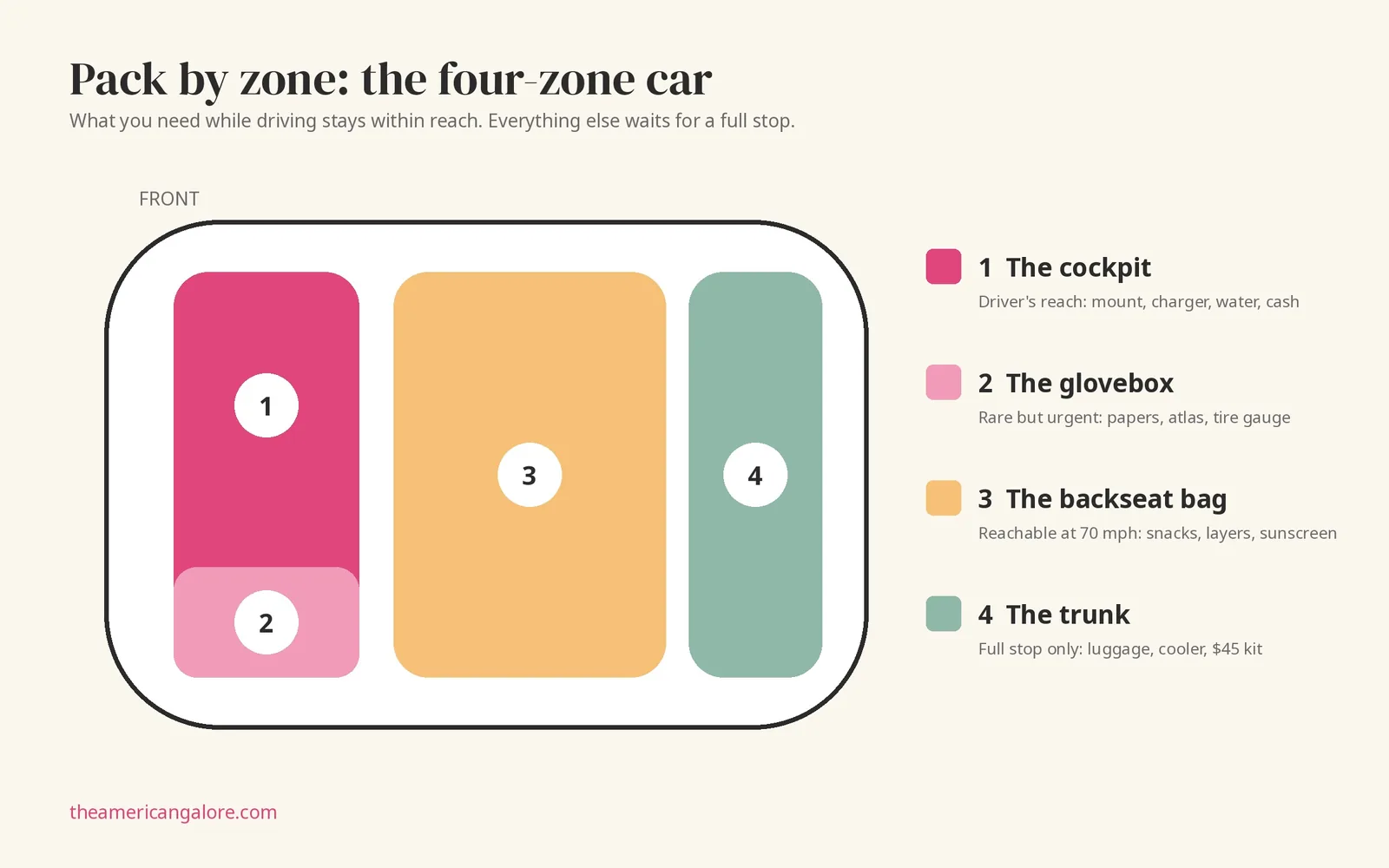
The rule is simple: pack by accessibility, not by category. Ask one question about every item. How fast will I need this while the car is moving?
- Zone 1, the cockpit: within the driver’s reach, no stretching.
- Zone 2, the glovebox: needed rarely, but needed fast when it counts.
- Zone 3, the backseat bag: the reachable-at-70-mph comfort layer.
- Zone 4, the trunk: everything that can wait for a full stop.
That is the whole system. When something is in the wrong zone, you feel it at mile 200. When everything is in the right zone, you never think about packing again.
Zone 1: The Cockpit (Driver’s Reach)
Eight items, and the discipline is keeping it at eight. An overloaded cockpit is a rolling junk drawer.
- ☐ Phone mount. A vent or dash mount, typically $15 to 25. Navigation in your lap is how wrong turns and worse happen.
- ☐ Car charger and cable. The founding item. Buy a dual-port charger, around $15, and leave it in the car permanently. It never comes inside, so it never gets forgotten.
- ☐ Sunglasses. In the visor clip, not in a bag.
- ☐ Lip balm and hand lotion. Desert air and AC air are the same enemy.
- ☐ Insulated water bottle. One per person up front. Fill at every stop.
- ☐ Small trash bag. A grocery bag looped over the shifter or a $10 hanging bin. Empty it at every gas stop. This one habit keeps the whole car civilized.
- ☐ Cash and quarters. Around $40 in small bills. Cash-only barbecue stands, air machines, and the occasional toll booth are all real.
- ☐ Napkins. A fat stack. There is no road trip without a spill.
Zone 2: The Glovebox
Seven items. The glovebox is not storage. It is the drawer you open twice per trip, urgently, both times.
- ☐ Registration and insurance card. Checked before departure, not during the traffic stop.
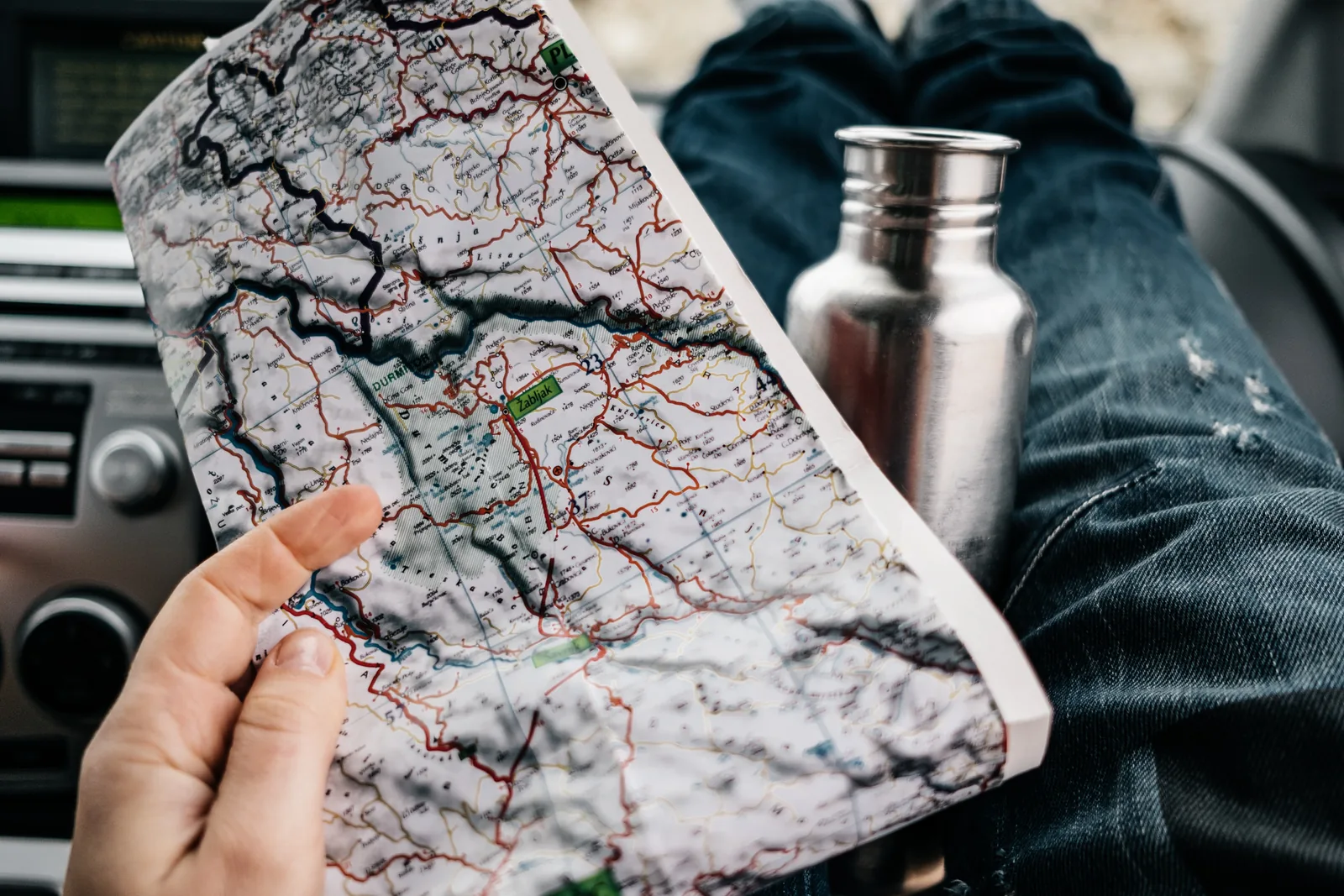
- ☐ Paper map or road atlas. Around $15 for a Rand McNally atlas. Cell coverage in west Texas and northern Arizona is a rumor, not a promise.
- ☐ Tire pressure gauge. Around $8. The dashboard warning light tells you something is wrong. The gauge tells you which tire and how bad.
- ☐ Spare charging cable. Cables fail on the road at a rate that feels personal.
- ☐ Pen and a small notebook. Motel confirmation numbers, mileage, the name of the diner you swore you would remember.
- ☐ Pain reliever and antacid. The two-hour headache and the gas station burrito both happen.
- ☐ A few bandages. The full first aid kit lives in the trunk. The paper-cut tier lives here.
Zone 3: The Backseat Bag
One soft tote or duffel on the backseat, ten items, reachable by the passenger without stopping. This is the comfort zone, literally.

- ☐ Snack bag. Heat-proof only. The full list is two sections down, because this deserves its own conversation.
- ☐ One warm layer per person. Even in July. Especially in July, when every diner is air-conditioned to meat-locker standards.
- ☐ A packable blanket. Doubles for picnics, chilly passengers, and impromptu overlook stops.
- ☐ Wet wipes. Non-negotiable with kids, still non-negotiable without them.
- ☐ Sunscreen. The left-arm trucker burn through the driver’s window is real. Reapply at gas stops.
- ☐ A gallon of drinking water. For refilling the cockpit bottles.
- ☐ Headphones. One pair per non-driver. Podcast peace is marriage preservation.
- ☐ One book or magazine per person. One. See the subtraction list below.
- ☐ Plastic grocery bags, five or so. Wet swimsuits, muddy shoes, trash overflow. The duct tape of bags.
- ☐ The kid or dog kit, if applicable. Collapsible water bowl, leash, activity pouch. Pack it as its own pouch inside the bag so it lifts out at stops.
Zone 4: The Trunk
Ten items. Everything here can wait for a full stop, which is the definition of trunk-worthy.
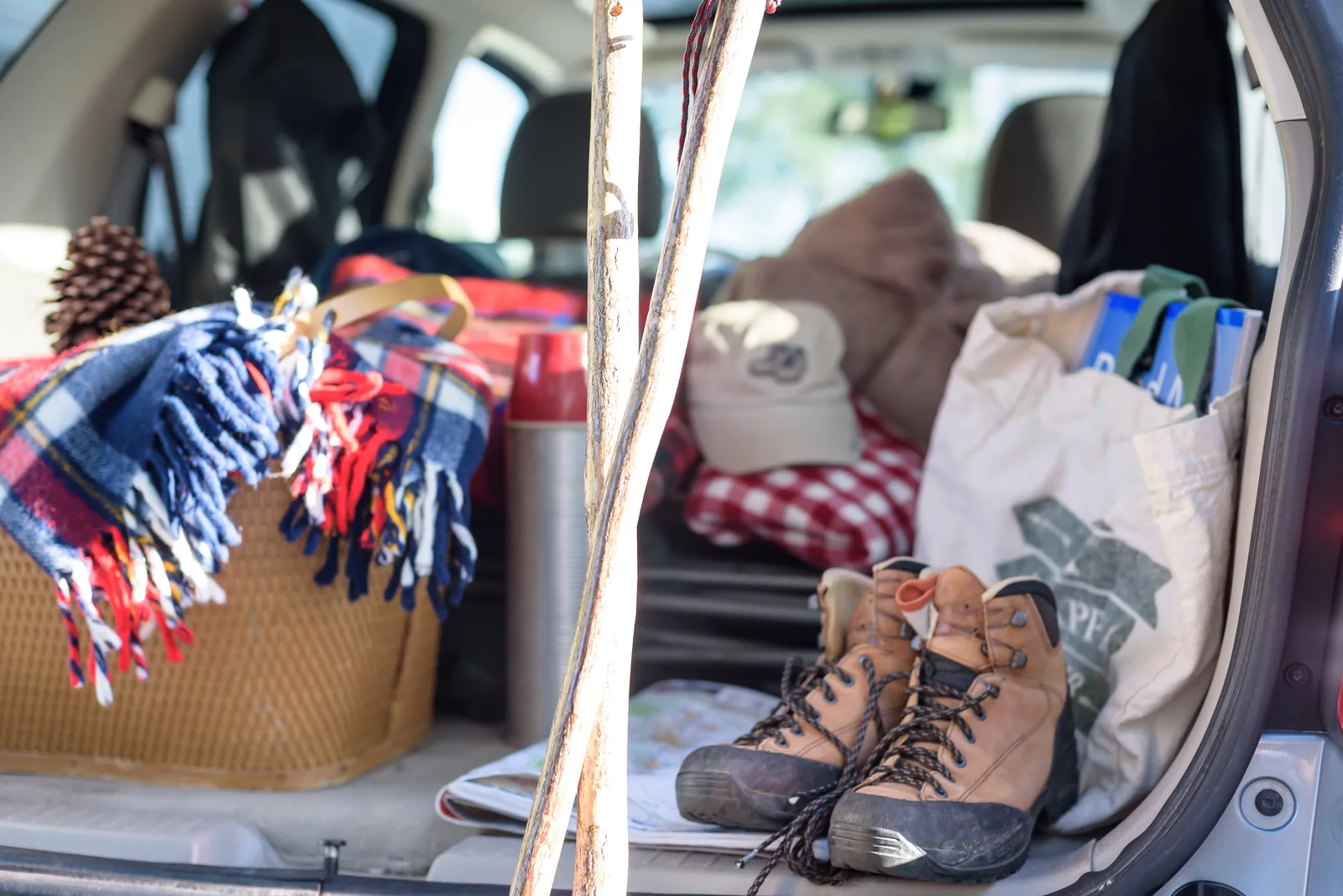
- ☐ Luggage, one soft bag per person. Soft bags play trunk tetris. Hard shells refuse to.
- ☐ The cooler. With an ice plan, meaning you know which gas stops sell bags of ice. A cooler without an ice plan is a warm box. More on my failure in the mistakes section.
- ☐ The $45 emergency kit. Detailed below.
- ☐ Jumper cables. Inside the kit, listed separately here because they are the item people assume they have and do not.
- ☐ A roll of paper towels. The napkin stack’s big sibling.
- ☐ Two reusable shopping bags. Grocery runs, farmers market ambushes, laundry.
- ☐ A real towel. Swimming holes, sudden rain, dusty windshields.
- ☐ Duct tape. A small roll, around $4. It has fixed a side mirror, a sandal, and a cooler lid in my car alone.
- ☐ Work gloves. Around $6. Tire changes and hot metal do not care about your manicure.
- ☐ Seasonal extra. Ice scraper in winter, a cheap windshield sunshade in summer, around $12.
The $45 Emergency Kit
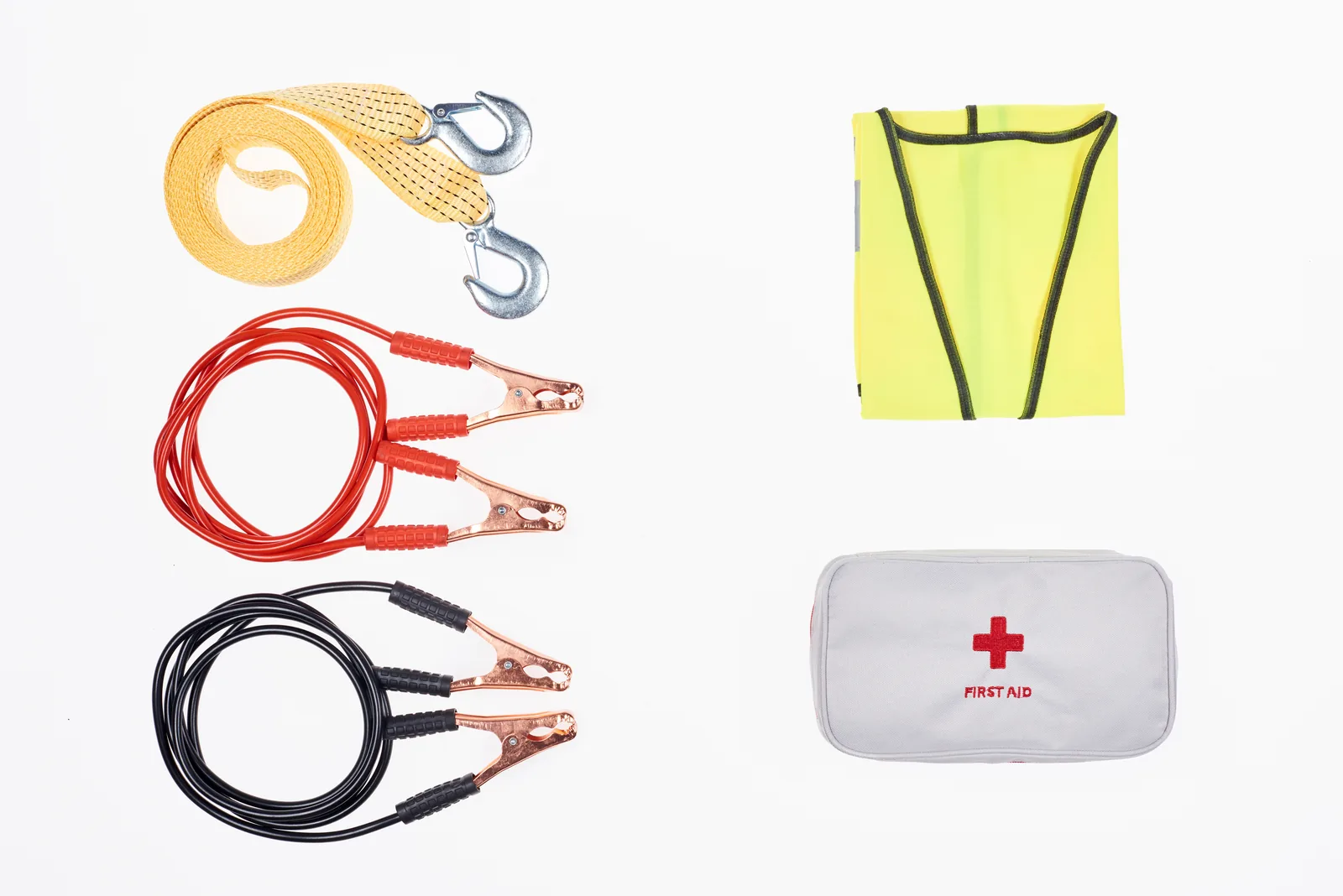
You can buy a pre-made kit for $70 and up, or build this one. AAA’s guidance on what a car emergency kit should contain is the reference here, and this covers their core list without the padding. Seven items, prices checked July 2026 at big-box retail:
| Item | Typical price |
|---|---|
| Jumper cables, 12 ft | around $18 |
| LED flashlight with batteries | around $7 |
| Basic first aid kit | around $10 |
| Emergency mylar blankets, 2-pack | around $3 |
| Reflective warning triangle | around $6 |
| Bottled water, 1 gallon | around $1 |
| Shelf-stable snack bars, 6-pack | around $3 |
Total: around $48, and every item fits in one zippered pouch or small bin. Add a phone number for roadside assistance written on paper inside the pouch, because a dead phone is exactly when you need it.
5 Things I Stopped Bringing
Every list tells you what to add. Almost none tell you what to cut. These five earned their exile over years of riding along uselessly.
- Full-size pillows. They eat a third of the backseat and every motel has four of them. A packable blanket folds into a pillow. A pillow folds into nothing.
- The giant thermos. Romantic in theory. In practice, gas station coffee exists every 40 miles and the thermos rolls around empty from day two.
- The portable car vacuum. I brought one on two trips. I used it zero times. The car wash vacuum at the end of the trip costs $2 and actually works.
- More than one book per person. Ambition packs the second book. Reality watches the landscape. The second book is dead weight with a bookmark.
- The “nice outfit, just in case.” In eight years of road trips, the case has never arrived. The best restaurant on Route 66 is happy to see you in clean denim.
The Printable
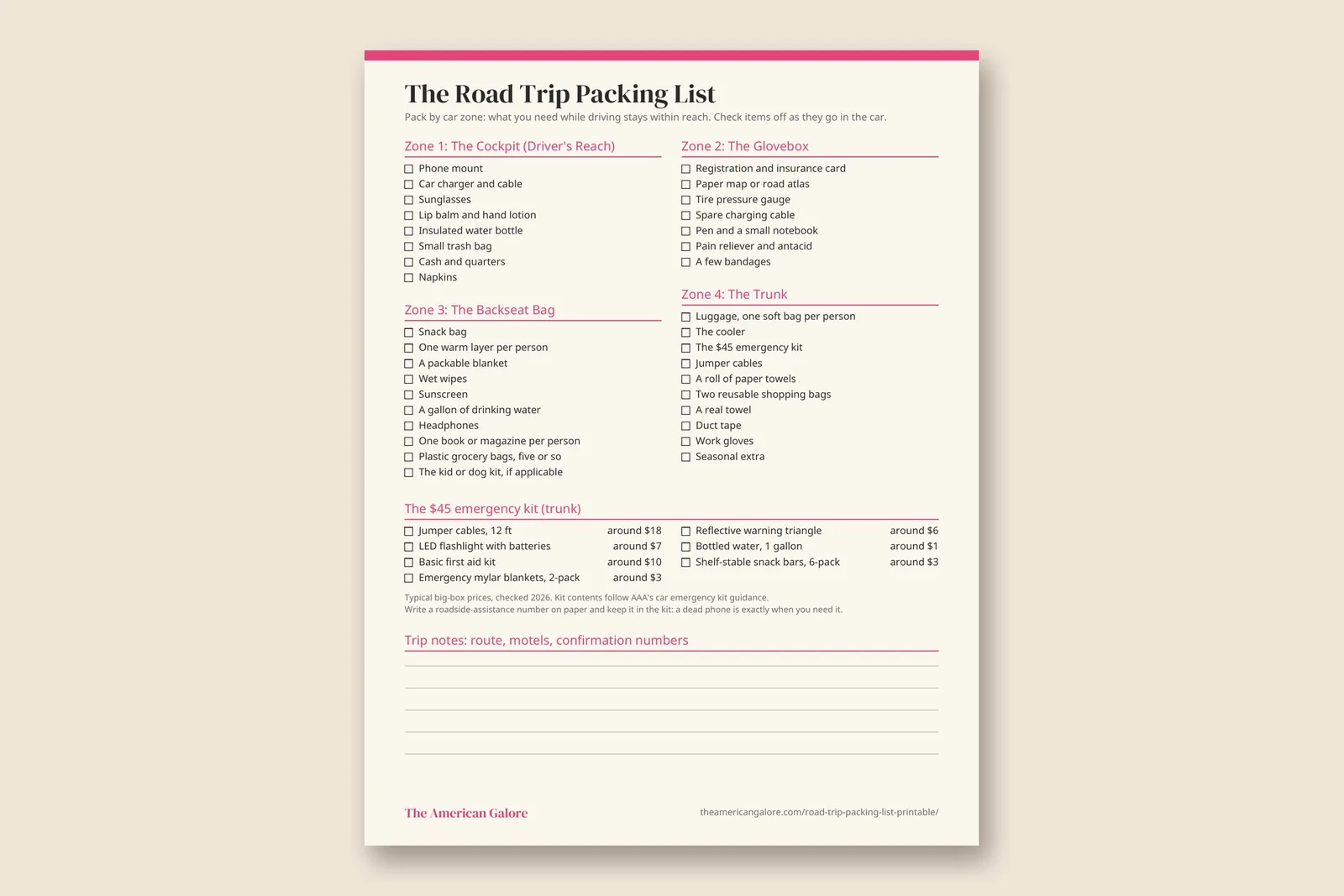
The whole system fits on one page: four zones, every checkbox, the emergency kit table. Print it, stick it on the fridge the week before you leave, and check things off as they go in the car, not before.
Download the TAG Road Trip Packing List (one-page PDF): free, no email required.
Snacks That Survive a Hot Car
Tested at real dashboard temperatures across Arizona and west Texas, which is a laboratory no snack brand advertises against.
Survivors: roasted nuts and trail mix without chocolate, pretzels, beef jerky, dried mango and apricots, crackers in a hard-sided container, and plain granola bars, the kind with zero coating.
Casualties: anything with a chocolate chip in it, string cheese outside the cooler, gummy candy, which fuses into one commemorative brick, and bananas, which go from breakfast to biohazard in about three hours of Texas sun.
The rule I pack by: if it would survive a day in a mailbox in Phoenix, it can ride in the backseat bag. Everything else goes in the cooler or stays home.

Mistakes That Cost Real Miles
- Packing everything in the trunk. The number one error. If the sunscreen requires a highway exit, you will not reapply the sunscreen.
- Cooler without an ice plan. My own entry. Day two of a June trip, I opened the cooler to cheese that had become a warm science experiment, because I assumed every gas station sells ice and the two I stopped at did not. Now I check the ice question when I check the gas gauge.
- No cash. The best food on any American two-lane is disproportionately cash-only.
- The overloaded cockpit. Eight items is the ceiling. When the cockpit turns into a junk drawer, the important things drown in it.
- Buying the charger on the road. Gas station electronics are priced for the desperate, which you will be. Around $30 for a charger worth $12. Ask me how I know.
FAQ
What should you not forget on a road trip?
The car charger, statistically and personally the most forgotten item. The fix is structural, not mental: buy a charger that lives in the car permanently and never comes inside. Registration and insurance documents are the second most consequential forget.
What goes in a car emergency kit?
Seven core items cover the realistic scenarios: jumper cables, a flashlight, a basic first aid kit, mylar blankets, a reflective triangle, a gallon of water, and shelf-stable snacks. Built from big-box retail it costs around $45 to 50, in line with AAA’s recommended contents, and fits in one pouch.
What snacks travel well in heat?
Nuts, pretzels, jerky, dried fruit, crackers, and uncoated granola bars all survive a hot car. Anything containing chocolate, soft cheese, or gummies does not. If it needs the cooler, respect the cooler.
How do I keep the car organized on a long trip?
Pack by zone, not by category: cockpit for the driver’s reach, glovebox for rare-but-urgent, one backseat bag for comfort items, trunk for everything that can wait for a stop. Then empty the trash bag at every gas stop. Those two habits do all the work.
One Page, Four Zones, Zero Panic
Print the list, load the zones, and the packing part of the trip disappears into the background, which is exactly where it belongs. The clothes going into that trunk duffel are covered in what to wear on a desert road trip, the road all of this was built for is our desert itinerary, and if the trip runs through the Texas Panhandle, the spray paint you will want in the trunk makes sense in the Cadillac Ranch how-to.
Prices in this guide were checked at publication and are shown as typical ranges. How we check facts and prices →